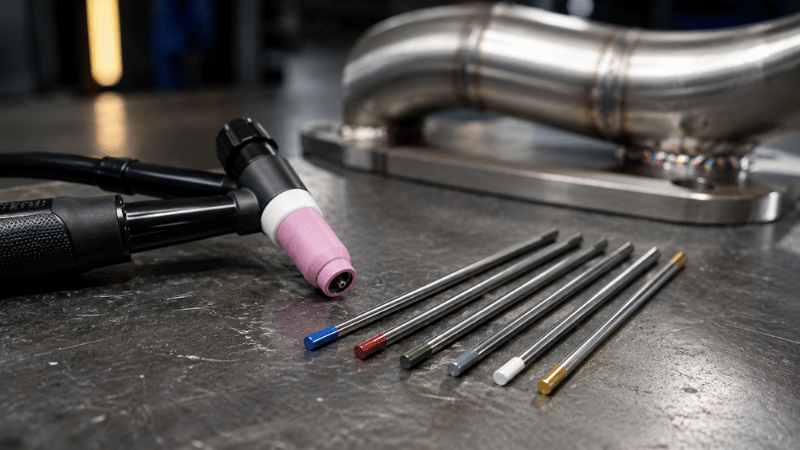
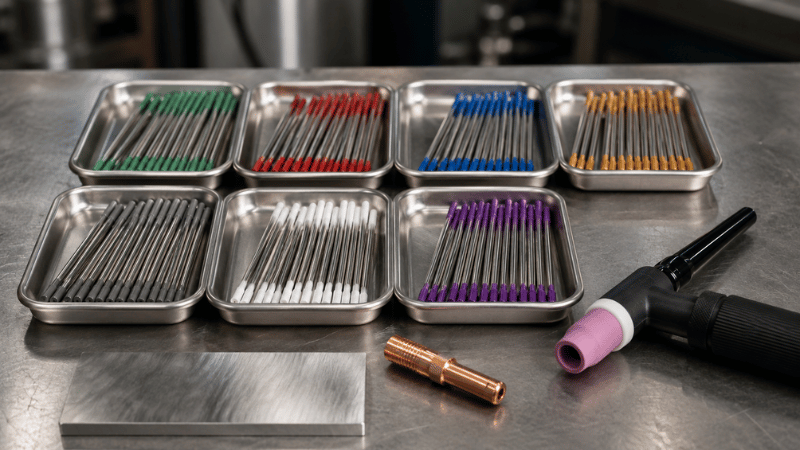
Choosing a tungsten electrode should not feel like decoding a welding secret society. But once green, red, blue, gold, gray, white, and purple tungsten hit the bench, things get colorful fast.
The good news? If you understand color, current type, base metal, and diameter, choosing TIG tungsten becomes much easier.
Quick Answer: Best TIG Tungsten for Most Welders
For many modern TIG welders, 2% lanthanated tungsten, usually marked blue, is the best all-purpose choice. It works well on AC and DC, performs nicely on aluminum, stainless steel, and mild steel, and avoids the radioactive concerns linked to thoriated tungsten.
Modern inverter TIG machines often pair well with lanthanated tungsten. Older transformer machines may still favor pure tungsten or zirconiated tungsten for some AC aluminum work. For more setup logic, see our guide to TIG welding aluminum AC settings.
When Red-Tip Tungsten Became a Compliance Cost
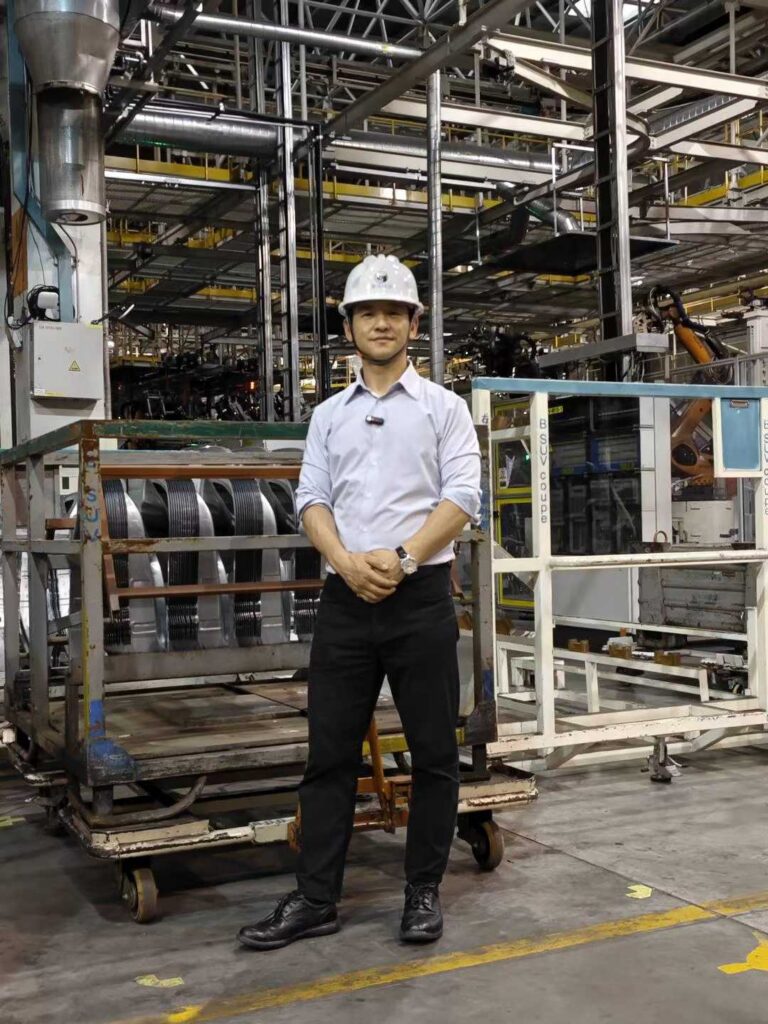
In May 2026, a small pressure-vessel and chemical piping workshop in Shanghai was still using red-tip 2% thoriated tungsten electrodes for manual TIG welding. The problem was not welding performance — it was the grinding dust.
Old Setup
Red-tip thoriated tungsten, manual grinding, no dedicated dust extraction.
Ikratz Upgrade
Smart welding equipment plus blue-tip 2% lanthanated tungsten electrodes.
Result: By replacing thoriated tungsten with 2% lanthanated tungsten and using Ikratz smart welding equipment, the customer avoided RMB 160k–200k in one-time compliance costs, reduced annual operating cost from RMB 30k–37k to RMB 9k–11k, and eliminated radioactive dust compliance risk.
Tungsten Electrode Basics
A tungsten electrode is the non-consumable electrode used in TIG welding. It creates and focuses the arc but is not meant to melt into the weld. That job belongs to filler rod.
Because tungsten handles extreme heat, its composition matters. Additives such as lanthanum, cerium, thorium, zirconium, and rare-earth blends affect arc starts, tip life, heat resistance, and stability. For a technical overview, see Miller’s tungsten electrode guide.
AC vs. DC TIG Welding
DC TIG welding, usually DCEN, is commonly used for mild steel, stainless steel, chromoly, titanium, and many nickel alloys. It gives a focused arc and good penetration.
AC TIG welding is commonly used for aluminum and magnesium because alternating current helps break surface oxides while still putting heat into the workpiece.
Older advice often recommended green pure tungsten for aluminum and red thoriated tungsten for steel. Today, modern inverter TIG welders often run aluminum well with sharpened or truncated blue lanthanated tungsten.
Tungsten Electrode Color Chart
Color bands identify electrode composition. Each color gives clues about arc behavior, tip durability, and suitable applications.
| Tungsten Color | Common Type | Best Use | AC/DC Suitability |
|---|---|---|---|
| Green | Pure tungsten | Older AC aluminum setups | AC mainly |
| Red | 2% thoriated tungsten | DC steel, stainless, chromoly | DC mainly |
| Blue | 2% lanthanated tungsten | General TIG, aluminum, steel, stainless | AC/DC |
| Gold | 1.5% lanthanated tungsten | General TIG, stable starts | AC/DC |
| Gray | Ceriated tungsten | Thin sheet, low amperage | AC/DC |
| White | Zirconiated tungsten | AC aluminum, contamination resistance | AC mainly |
| Purple | Rare-earth blend | Multi-purpose TIG | AC/DC |
Exact TIG tungsten colors can vary by region, standard, or supplier. Always confirm the package label, product data, and SDS before stocking your shop drawer like a tungsten candy store.
Best Tungsten Color by Job
For aluminum TIG welding, blue lanthanated is a strong default for many modern inverter TIG machines. White zirconiated can support AC stability, while green pure tungsten still has a place with some older transformer units.
For stainless steel TIG welding, blue lanthanated, red thoriated, and gray ceriated are common options. Blue is the practical all-rounder. Gray works well on thin, low-amperage jobs.
For mild steel TIG welding, blue lanthanated or red thoriated both perform well on DCEN. If safety simplicity matters, blue has the advantage because it is non-radioactive.
How to Choose the Right TIG Tungsten
Start with the base metal. Aluminum and magnesium usually mean AC TIG. Stainless, mild steel, chromoly, and titanium usually mean DC TIG.
Then check your machine type. A modern inverter may run sharpened lanthanated tungsten beautifully on AC aluminum. An older transformer machine may behave better with pure or zirconiated tungsten.
Safety also matters. Red thoriated tungsten performs well, but it contains thorium. The American Welding Society notes that grinding thoriated tungsten can create radioactive dust, so dust control, ventilation, and proper collection matter. Read the AWS thoriated tungsten safety fact sheet before building shop procedures around red tungsten.
Best Tungsten for Aluminum, Steel, and Stainless
For aluminum, try blue lanthanated first on a modern inverter TIG welder. For older AC machines, green pure tungsten or white zirconiated may be more predictable.
For stainless steel, blue lanthanated is often the easiest default. Red thoriated also performs strongly on DC, but grinding dust concerns make many shops choose lanthanated or ceriated alternatives.
For mild steel, blue lanthanated gives stable starts, good tip life, and simple inventory control. For thin sheet metal, gray ceriated tungsten deserves attention. CK Worldwide describes ceriated tungsten as useful for low-current welding, especially on thin stainless steel and mild steel. Their tungsten selection guide is useful when comparing electrode types.
Tungsten Electrode Size Chart
Color gets attention, but diameter does just as much work. A perfectly chosen color in the wrong size is like wearing steel-toe boots three sizes too big: technically protective, practically annoying.
| Diameter | Metric Size | Common Use |
| 1/16 in. | 1.6 mm | Thin sheet, low amperage, detailed work |
| 3/32 in. | 2.4 mm | General fabrication, most shop TIG work |
| 1/8 in. | 3.2 mm | Higher amperage, thicker material, aluminum work |
Use smaller tungsten for low amperage and thin material. Use larger tungsten for higher amperage and thicker material. For broader TIG setup logic, compare your amperage range with our welding parameters and settings charts.
| Symptom | Possible Cause |
| Tip overheats or melts | Tungsten may be too small |
| Arc wanders | Tungsten may be contaminated or poorly ground |
| Hard arc starts | Tungsten may be too large for low amperage |
| Wide, lazy arc | Diameter may be oversized or grind angle too blunt |
How to Prepare and Sharpen Tungsten
For DC TIG, use a pointed tungsten. A clean, lengthwise grind helps create a focused arc and better puddle control.
For higher amperage work, use a truncated point: grind a point, then add a small flat at the tip. This helps prevent the tip from breaking off and joining the weld as an unwanted guest.
For some AC aluminum applications, older setups may use a balled tip. Modern inverter machines often perform better with sharpened or slightly truncated lanthanated tungsten.
Grind tungsten lengthwise, not around the electrode. Use a dedicated wheel or tungsten grinder to avoid contamination from steel, aluminum, or mystery shop dust.
Contamination Control
Keep tungsten away from filler rod contact and the weld puddle. The moment you dip it, stop and regrind. Annoying? Yes. Optional? Not if you want a clean weld.
Store electrodes by tungsten color and diameter. Label tubes clearly. A mixed tungsten drawer is how good welders lose trust in humanity.
Thoriated Tungsten Safety
Red thoriated tungsten is still popular because it starts well, carries current effectively, and feels familiar to many welders running DC TIG.
The issue is thorium. Thoriated tungsten contains radioactive material, and the main concern is dust generated during grinding. Shops should use proper dust control, ventilation, PPE, SDS review, and workplace procedures.
Safer alternatives include lanthanated, ceriated, zirconiated, and rare-earth tungsten blends. For many shops, switching to non-radioactive TIG welding tungsten electrodes reduces safety complexity without giving up performance.
Common TIG Tungsten Problems and Fixes
If the arc wanders, check contamination, grind direction, gas coverage, polarity, and whether the electrode is too large for the amperage.
If the tungsten keeps balling or melting, check amperage, diameter, and machine settings.
If the arc is hard to start, the tungsten may be oversized, contaminated, blunt, or poorly sharpened.
If the weld looks dirty, check base metal cleaning, shielding gas flow, cup size, stickout, drafts, filler cleanliness, and whether you dipped the tungsten. The puddle remembers.
Buying Guide: Choosing TIG Welding Tungsten Electrodes
Before buying, confirm the correct color and composition. Look for clear labeling, consistent packaging, SDS availability, and a useful diameter assortment.
A strong starter kit includes 3/32-inch blue lanthanated for general use, 1/16-inch blue or gray for thin material, and optional white zirconiated or green pure tungsten for AC aluminum practice on older machines.
Replace tungsten when it becomes too short to handle safely, repeatedly splits, is badly contaminated, or can no longer be prepared consistently.
Tungsten Choice in Automated TIG Welding
In manual TIG, tungsten selection affects operator comfort and weld consistency. In automated GTAW, it matters even more because one unstable arc can repeat the same defect over and over with excellent robotic confidence. Very impressive. Very expensive.
For orbital and tube-to-tubesheet welding, stable tungsten geometry helps maintain repeatable arc focus, heat input, and bead appearance. If your application involves precision tube welding, see the MWP-65 orbital tube-to-tubesheet welding machine for an example of automated GTAW equipment designed around stable arc performance.
Expert Tips for Cleaner TIG Welds
Match tungsten to the job, not just the color. Base metal, current type, machine type, amperage, joint fit-up, and tip preparation all matter.
Keep a dedicated tungsten setup system. Separate colors and diameters. Label storage tubes. Use a dedicated grinding wheel.
Use machine manuals, manufacturer data, SDS sheets, and recognized safety guidance, especially for thoriated tungsten and grinding dust exposure.
FAQs
What color tungsten is best for TIG welding?
Blue 2% lanthanated tungsten is a common all-purpose choice for many modern TIG welders. However, the best tungsten color depends on whether you are welding aluminum, steel, stainless, or another metal, and whether you are using AC or DC.
What tungsten should I use for aluminum TIG welding?
Many modern inverter TIG machines work well with blue lanthanated tungsten for aluminum. Green pure tungsten or white zirconiated tungsten may be used in certain AC applications, especially with older machines.
Is red thoriated tungsten safe to use?
Red thoriated tungsten can perform well for DC TIG welding, but it contains thorium and requires extra care when grinding. Use dust control, PPE, ventilation, and review the electrode SDS or workplace safety guidance before use.
What tungsten size should beginners buy first?
For most beginners, 3/32-inch blue lanthanated tungsten is the best first purchase. Add 1/16-inch tungsten for thin sheet work and 1/8-inch tungsten for higher-amperage jobs.
Conclusion
A tungsten electrode is small, but it has a big say in arc stability, starts, tip life, and weld cleanliness. Color identifies composition, but the best choice depends on metal, current type, machine, amperage, diameter, and preparation.
For many modern welders, blue TIG tungsten, especially 2% lanthanated tungsten, is the practical all-purpose choice. Choose smart, sharpen clean, store carefully, and your arc will stop acting like it has commitment issues.
Need the Right TIG Tungsten Without Guesswork?
Choosing TIG consumables should not require a welding séance. iKratz helps customers match TIG welding solutions to machine type, base metal, amperage range, and production needs, with practical support for shops that prefer clean arcs over costly trial and error.
Contact us today to request a welding solution review or discuss the right TIG setup for your production line.