Choosing aluminum for welding sounds simple until your production line starts throwing tantrums. What works beautifully in a skilled welder’s hands can fall apart in robotic production.
This guide cuts through the noise. We’ll break down what actually works at scale, where weldability, HAZ performance, and automation stability matter more than brochure strength.
⚡ QUICK ANSWER: THE BEST WELDABLE ALUMINUM
For automated manufacturing, the 5xxx series (5052, 5083) is generally the best choice due to its high resistance to hot cracking and minimal HAZ strength loss. While the 6xxx series (6061) is versatile, it requires precise thermal control and specific filler metals (like 4043) to prevent structural softening in high-volume robotic lines.
What Competitor Articles Usually Miss (and What You’ll Learn Here)
Most articles stop at “this alloy is easy to weld.” That’s incomplete.
“Easy to weld” does not mean “stable in automation.”
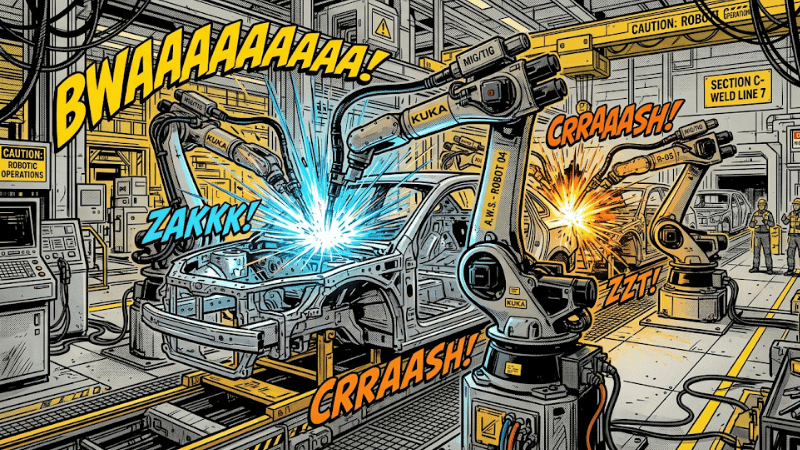
Robotic welding exposes flaws fast. Tight tolerances, surface variability, and long seams do not forgive material shortcuts.
HAZ strength beats catalog strength.
Your part does not fail in the base metal. It fails where heat weakens it. That is the heat-affected zone (HAZ), and it is where real-world performance lives.
Filler choice is not a footnote.
The difference between 4043 vs 5356 filler can mean cracking versus consistency, corrosion resistance versus callbacks.
NEV and BIW change the rules.
Battery trays and body-in-white structures prioritize post-weld integrity and repeatability, not just ease of welding.
What “Weldable Aluminum” Actually Means
Weldability is not just whether you can join it. It is whether you can do it reliably thousands of times.
A truly weldable aluminum alloy offers:
- Resistance to hot cracking
- Stable arc or beam behavior
- Predictable HAZ performance
- Acceptable corrosion behavior
- Repeatability at scale
Aluminum is tricky for several reasons:
- Oxide layer melts at higher temperatures than base metal
- High thermal conductivity causes rapid heat dissipation
- Distortion and burn-through risks
- High sensitivity to contamination
Real weldability is a system outcome.
It depends on alloy, temper, filler, joint design, and process, not just material selection.

Robotic vs. Manual Weldability: Why Production Changes Everything
Manual welding allows human adjustment. Robots do not.
Automation demands consistency.
Gap tolerance, surface prep, and fit-up must be predictable every time.
Alloy choice affects uptime.
Poor material leads to spatter, unstable arcs, and frequent torch cleaning.
5xxx alloys perform better in automation.
They provide:
- Wider process windows
- Better tolerance to variation
- Stable long-seam welding
Process matters as well.
- CMT is ideal for thin sections
- MIG is versatile but parameter-sensitive
- Laser hybrid welding is fast but requires precision
Reality from production lines:
What works in prototypes often fails in volume production. Material choice is usually the reason.
The Fastest Answer: Which Aluminum Alloys Are Best?
Best Overall: 5xxx Series
- 5052 for sheet metal and enclosures
- 5083 for battery trays and marine use
- 5454 for elevated temperature
These alloys offer excellent weldability, corrosion resistance, and production stability.
Best for Structural and Extrusions: 6xxx Series
- 6061 for structural frames
- 6063 for architectural extrusions
They are versatile but require careful consideration.
Use With Caution
- 2xxx and 7xxx alloys
- Copper-rich grades prone to cracking
The HAZ Strength Gap: Why 6061 Can Be a Trap
6061-T6 loses strength after welding.
This happens because welding disrupts the heat-treated temper.
The result includes:
- Local softening in the HAZ
- Reduced load-bearing capacity
- Increased structural risk
5xxx alloys retain more usable strength after welding.
This matters in:
- BIW structures
- Subframes
- Battery enclosures
When 6061 still works:
- Extrusion availability is required
- Post-weld heat treatment is planned
- Machining is critical
Key takeaway:
If no post-weld heat treatment is planned, 5xxx alloys are often the safer structural choice.
5xxx vs 6xxx Aluminum for Welding
Why 5xxx Is Preferred
- Better weldability
- Superior corrosion resistance
- Stronger post-weld performance
Why 6xxx Is Still Used
- Widely available extrusions
- Good machinability
- Balanced properties
Tradeoff summary:
- 5xxx focuses on reliability
- 6xxx focuses on flexibility
Automation conclusion:
5xxx alloys typically provide better repeatability and lower production risk.

Grade and Filler Synergy: The Real Specification Game
5052 Aluminum
Best for sheet and formed parts.
Reliable and production-friendly.
Filler options:
- 4043 for smoother welds
- 5356 for higher strength
5083 Aluminum
Ideal for battery trays and corrosion-heavy environments.
Advantages:
- High strength
- Excellent corrosion resistance
- Stable robotic welding performance
Filler pairing typically uses 5356.
5454 Aluminum
Used in elevated temperature and pressure applications.
Filler selection balances weld integrity and service conditions.
6061 Aluminum
Versatile but sensitive to HAZ softening.
Filler options:
- 4043 for crack resistance
- 5356 for strength
6063 Aluminum
Best for appearance-focused extrusions.
Filler choice prioritizes surface finish.
| Performance Metric | 5xxx Series (e.g. 5083) | 6xxx Series (e.g. 6061) |
|---|---|---|
| HAZ Strength Loss | Minimal (10-15%) | High (30-50%) |
| Crack Sensitivity | Very Low | Moderate-High |
| Best For… | BIW, Battery Trays | Frames, Machined Parts |
Case Study: Solving HAZ Softening in Heavy-Duty Aluminum Frames
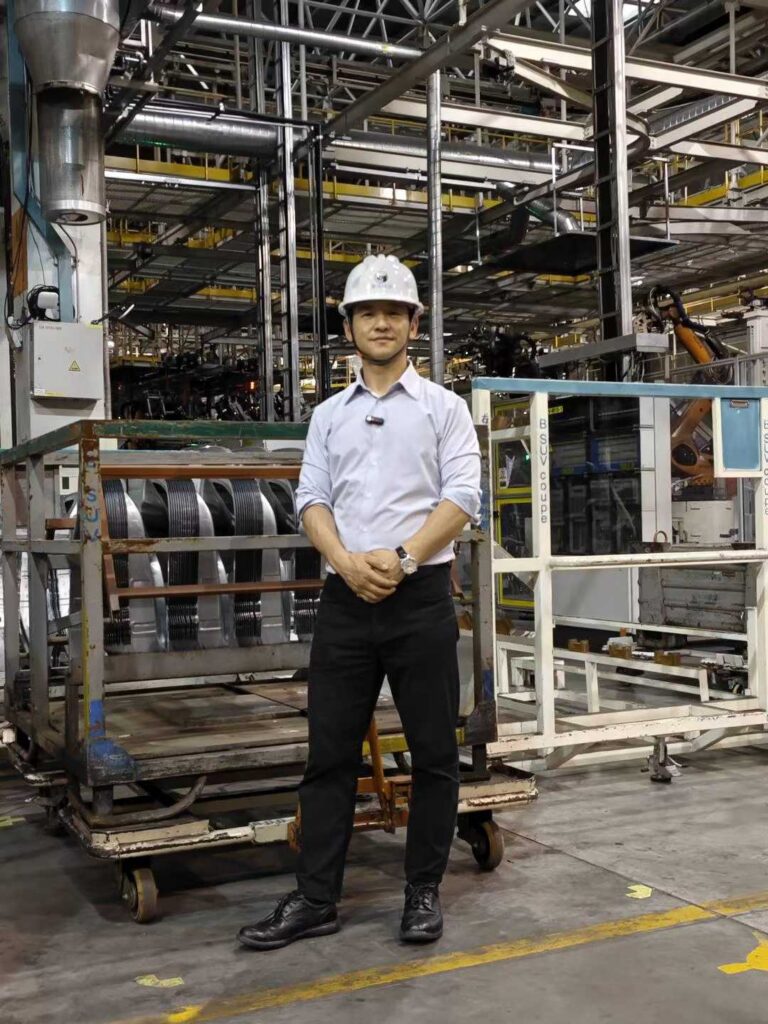
In 2018, during a robotic welding project for Changan Ford’s vehicle frames, our team faced a classic engineering dilemma involving 6xxx-series aluminum. While the material’s catalog strength was ideal for weight reduction, the heat-affected zone (HAZ) experienced a significant drop in structural integrity—a common pitfall when T6 tempers are exposed to high-intensity welding.
The Challenge: The structural nodes showed a nearly 50% loss in yield strength post-welding, threatening the safety-critical requirements of the chassis.
The Solution: Instead of relying on expensive post-weld heat treatment, ikratz worked with the design team to optimize the joint geometry and shifted the welding sequence to minimize heat accumulation. We also utilized Digital Twin simulation to predict stress concentrations, ensuring the frame met all crash-test standards.
The ikratz Standard: This project led us to develop our current Material-Process Synergy Matrix, helping clients choose between 5xxx and 6xxx series based on real-world welded performance, not just raw material specs.
Why 5083 Dominates NEV Battery Trays
Battery trays require:
- Corrosion resistance
- Structural integrity
- Weld consistency
- Low rework rates
5083 meets all these requirements.
It also supports long, stable robotic weld seams, critical for EV production.
5052 may be used in secondary components, while 6061 introduces potential HAZ-related tradeoffs.
Best Alloys for BIW and Automotive Structures
BIW design focuses on:
- Crash performance
- Dimensional stability
- Automation repeatability
5xxx alloys offer advantages through better post-weld strength and consistency.
6xxx alloys are used when extrusion and manufacturing needs require them.
How to Choose the Best Aluminum for Welding
Evaluate:
- Weldability
- HAZ performance
- Corrosion environment
- Automation compatibility
- Filler compatibility
- Supply chain reliability
Application guidance:
- Battery trays use 5083
- BIW favors 5xxx
- Sheet metal uses 5052
- Structural machining uses 6061

Welding Process Factors That Matter
MIG vs TIG:
MIG dominates production, TIG is used for precision.
CMT:
Reduces heat input and distortion.
Laser welding:
Fast but requires tight control.
Key variables include:
- Heat input
- Joint fit-up
- Surface cleanliness
Important reminder:
Process and material must be selected together.
Common Mistakes When Choosing Aluminum
Choosing based on base strength
Solution: evaluate HAZ performance
Ignoring filler selection
Solution: treat filler as critical
Relying on prototype results
Solution: validate in production conditions
Ignoring corrosion environment
Solution: match material to service conditions
How Digital Twin and Simulation Improve Decisions
Simulation helps identify:
- HAZ softening zones
- Distortion risks
- Stress concentrations
Example:
A 6xxx design shows stress concentration. Switching to 5xxx reduces risk before production.
What I’ve Learned From Real Programs
The best alloy supports production stability, not just strength.
Teams often underestimate:
- Filler impact
- HAZ softening
- Maintenance costs
Rule of thumb:
If it improves uptime and reduces rework, it is likely the right choice.
Buyer and Engineer Checklist
Before finalizing:
- Load requirements
- Environment
- Welding process
- Filler compatibility
- Supply chain reliability
📋 Pre-Launch Material Checklist
- Has the HAZ strength loss been factored into structural loads?
- Is the filler metal (e.g., 5356 vs 4043) matched to the specific alloy temper?
- Has Digital Twin simulation validated the robotic welding sequence?
- Is the supplier AEO-certified for secure international delivery?
* If you checked fewer than 3 boxes, your project may be at risk of integration delays.
Conclusion
In real-world manufacturing, the best aluminum for welding is defined by performance across HAZ strength, automation stability, and filler compatibility, not just alloy type. In most cases, 5xxx alloys deliver more reliable results thanks to their weldability, corrosion resistance, and stronger post-weld performance. While 6xxx alloys like 6061 still have value, they require careful control due to HAZ softening, especially without post-weld treatment. For applications such as NEV battery trays and BIW structures, the right material is the one that ensures consistent production and long-term reliability.
CTA: Build Your Welding Strategy Right the First Time
Get Expert Guidance for Your Aluminum Welding Project
Choosing the wrong alloy can impact quality, cost, and production timelines. We help you select the right aluminum, filler, and welding process combination for stable and scalable manufacturing.
Contact us today to request an engineering review and optimize your welding performance from the start.
Frequently Asked Questions
Q1: What is the best aluminum alloy for robotic welding?
A: In most automated environments, 5xxx series alloys are preferred due to better stability and post-weld reliability.
Q2: Why is 6061 sometimes unsuitable for welded structures?
A: Because welding reduces strength in the heat-affected zone, especially without heat treatment.
Q3: Why is filler selection important?
A: It directly affects crack resistance, corrosion performance, and weld quality.