Most welding machines are rated using a 10-minute test window, but brochure percentages rarely show how a machine behaves once heat builds up.
That’s why smart buyers ask a better question: not “Is it 100% duty cycle?” but “Will it stay stable, accurate, and profitable through real production?”
The Question Every Buyer Asks First
Most welding machines fall between 20% and 60% duty cycle at maximum output, while industrial systems may reach much higher under tightly controlled conditions.
Why the Headline Percentage Is Not the Whole Story
Duty cycle is a safety rating, not a guarantee of arc quality. It tells you how long a machine can run before overheating protection kicks in, but not whether weld consistency stays intact.
What You Will Learn Here
This guide explains what duty cycle really means, why “100% duty cycle” can be misleading, and why a stable 80% to 90% operating zone often matters more in real production.
What Is Duty Cycle in Welding? (Beyond the Dictionary)
The 10-Minute Reality Check
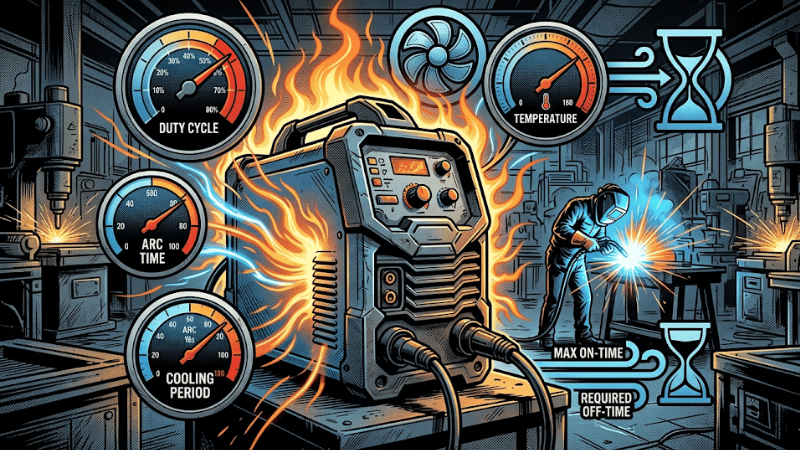
Duty cycle is the percentage of a 10-minute period that a welder can operate at a stated output before cooling is required. A 70% duty cycle means 7minutes of welding and 3 minutes of cooling.
Why Duty Cycle Exists as a Safety Metric
It exists to protect internal electronics like IGBTs, transformers, and other heat-sensitive components. As temperatures rise, electrical losses increase, which is why thermal management is critical in high-output systems.
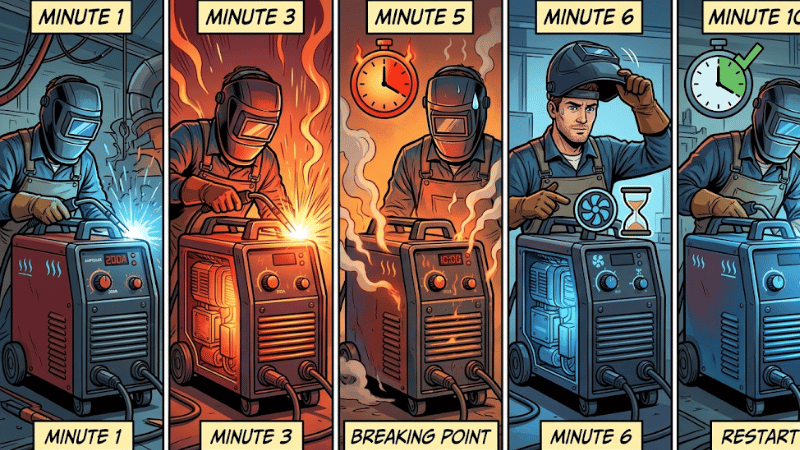
Most Welding Machines Have Approximately What Percent Duty Cycle?
The Realistic Benchmark Ranges
Here is the practical answer:
- Entry-level / hobbyist: around 20% to 30%
- Mid-range fabrication: around 40% to 60%
- Industrial / orbital systems: often 80% to 100% under proper cooling and test conditions
So, for most machines on the market, the honest answer is 20% to 60%, while premium industrial systems sit much higher.
Why One Number Is Never Enough
Duty cycle changes with amperage, cooling method, and ambient temperature. A machine that looks impressive on paper can perform very differently in a hot shop or automated line.
The Marketing Lie vs. Engineering Reality
The “100% Duty Cycle” Trap
Yes, some machines are rated for 100% duty cycle at a certain output. But that does not always mean perfect weld quality through an entire shift.
A machine may technically stay on while output consistency drops as heat builds. That’s where thermal drift becomes the real problem.
Defining the 80 to 90 Percent Stability Zone
At iKratz, we focus on the 80% to 90% stability zone instead of chasing spec-sheet perfection.
In orbital and automated welding, the real question is not “Can it stay powered?” but “Can it stay precise from start to finish?”
How Ambient Temperature Shatters Your Parameters
The 40°C Standard vs. the 45°C Reality
Many welding ratings are tied to test conditions around 40°C ambient, and performance often drops above that point. So if your workshop is hotter than the rating condition, usable duty cycle can fall fast. (Intertek / IEC 60974-1 overview)
📊 Real-World Industrial Case Study: Russia (2009)
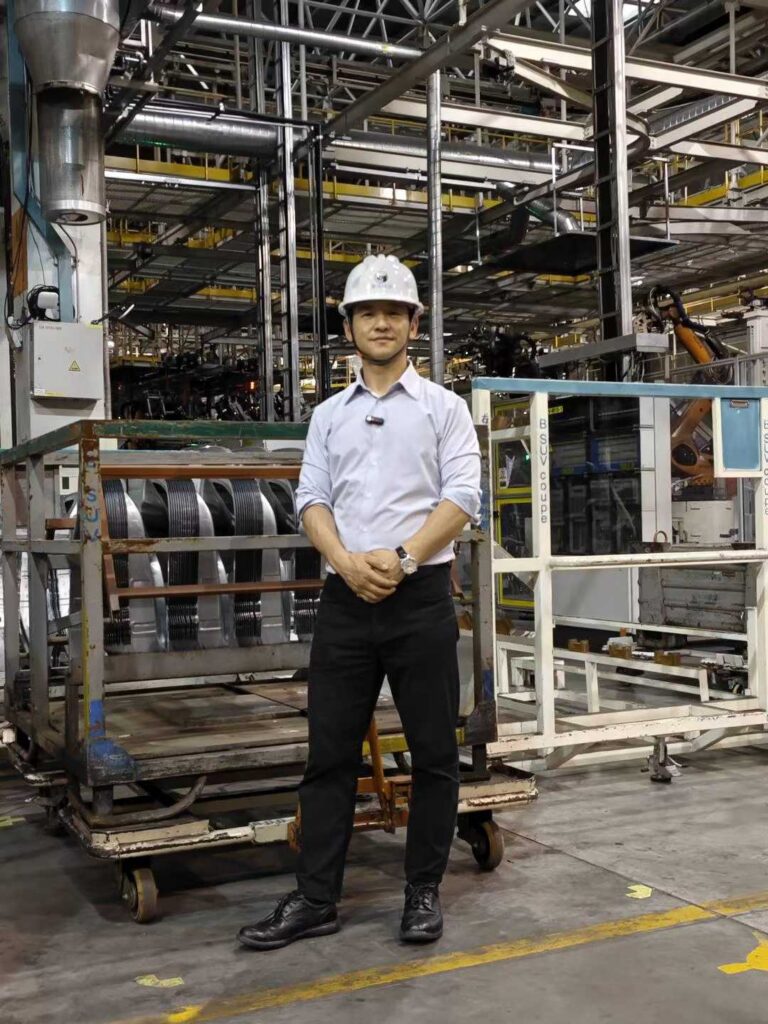
Location: Tyumen, Russia | Environment: -20°C (-4°F) | Equipment: Automated Orbital System
In January 2009, during the commissioning of a high-pressure piping project, we encountered a technical paradox. While standard logic suggests that cold environments aid heat dissipation, the extreme **-20°C ambient temperature** actually caused a significant performance collapse.
Our technical analysis revealed two critical failure points that brochure-spec duty cycles never mention:
- Capacitor Latency: The ESR (Equivalent Series Resistance) of electrolytic capacitors spiked, causing massive ripple in the output.
- IGBT Switching Losses: The power modules suffered from sluggish response times, leading to a 40% drop in stable capacity and severe current drift.
The Outcome: Machines claiming “100% Duty Cycle” failed to maintain arc stability. Only systems engineered with Active Thermal Management and high-mass heatsinks survived. At iKratz, we define our 80–90% stability zone based on these harsh engineering realities, not lab-controlled fantasies.
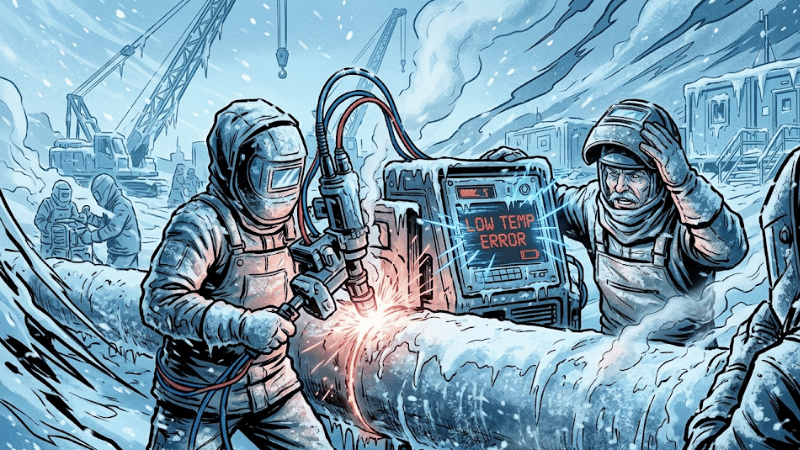
Why Extreme Cold Kills Duty Cycle
Extreme cold can hurt electronics before stable operation begins. Capacitor impedance changes at low temperatures, and IGBT performance also shifts with temperature. (Nichicon)
That’s why serious industrial systems rely on pre-heating, oversized thermal design, or liquid cooling—not luck.
Duty Cycle Formula: How to Calculate It Correctly
The Standard Formula
Duty Cycle (%)=(Ton+ToffTon)×100
If a welder runs 6 minutes and cools 4 minutes, the duty cycle is 60%.
Recalculating for Amperage Changes
Duty cycle drops quickly as current rises because heat generation follows the I²R relationship. Higher amperage means disproportionately higher heat, which shortens usable runtime. (ScienceDirect)
Why 60% Duty Cycle Is Fatal for Automation
Manual Work vs. Automated Demands
Manual welding includes natural pauses. Automation does not. Orbital welding and robotic production are continuous, so a thermal trip mid-cycle often means scrap, not just delay.
The ROI of Stability
Stable output beats theoretical maximum uptime. In automated welding, a stable 90% system reduces stoppages, rework, and scheduling chaos.
Comparison Matrix: Stable 90% vs. Marketing 100%
| Operating Condition | “Marketing 100%” Machines | iKratz “Stable 90%” System |
|---|---|---|
| Standard Ambient (25°C) | High risk of current drift as heat builds up internally. | Precision ±1A; constant arc quality from start to finish. |
| Extreme Cold (-20°C) | “Cold-start” instability; component lag and potential damage. | Pre-heated logic for predictable, full-load startup. |
| Extreme Heat (45°C) | Frequent thermal trips and protection shutdowns. | Active management maintains steady 80% duty. |
| Long-term ROI | Higher scrap rates due to thermal inconsistency. | Predictable throughput; zero thermal-related scrap. |
How to Spot Inflated Duty Cycle Ratings
Check Heatsink Mass
A light machine claiming heavy-duty thermal performance deserves scrutiny. Real cooling requires real thermal mass.
Check Active vs. Passive Cooling
Ask whether the system uses only fans or also dedicated liquid cooling, especially for orbital applications.
Perform a 10-Minute Drift Test
Run the machine at target output and check whether current stays stable after heat builds. If output drifts while the machine is still technically running, the duty cycle claim is not telling the full story.
You can also explore our related pages on orbital welding systems.
Conclusion
Most welding machines are commonly rated around 20% to 60% duty cycle, while industrial systems can reach higher. But buying decisions should not rely on one brochure number alone.
In orbital and automated welding, stable 80% to 90% output is often the real sweet spot for uptime, arc quality, and ROI.
Why Manufacturers Choose iKratz for Stable Welding Output
At iKratz, we build for real production conditions: heat buildup, cold starts, long duty cycles, and minimal tolerance for drift.
Contact us today to discuss your welding application and find a system built for stable, repeatable output—not just impressive marketing numbers.
Frequently Asked Questions
Q1: What does 70% duty cycle mean?
It means the welder can run for 7 minutes in a 10-minute cycle, then needs about 4 minutes of cooling.
Q2: Is 100% duty cycle always better?
No. A stable 80% to 90% output can be more valuable than an unstable 100%, especially in precision or automated welding.
Q3: Does cold weather improve duty cycle?
Not necessarily. Low temperatures can negatively affect capacitors and power electronics, especially during startup.