Many welding automation projects do not fail because the robot is bad. They fail because the process around it is unstable.
The real issue is not speed. It is whether the welding process is controlled well enough to deliver repeatable quality at scale.
Welding Automation Is a Precision Chain
Most companies evaluate welding automation like a standalone machine. That is the first mistake.
Automation is really a precision chain: part accuracy, fixture rigidity, torch motion, parameter control, and inspection all work together. If one link drifts, weld quality drifts too.
That is why a robot can be perfectly repeatable and still produce inconsistent results. It repeats the process it is given, including bad fit-up, unstable clamping, or poor joint prep.
Automation does not remove process weakness. It exposes it.

Why Small Tolerance Errors Create Big Problems
Tiny dimensional shifts can cause expensive downstream trouble.
On some joints, even a 0.1 mm gap variation can affect arc behavior, heat input, penetration, and final distortion. What looks minor on a drawing can become major rework on the shop floor.
That is why blaming the robot is often premature. In many cases, the real problem is loss of control across the full precision chain.
Manual Welding vs. Automated Welding
Manual welding is strong because skilled welders can adapt. They can respond to fit-up drift, changing access, and inconsistent joints in real time.
Automated welding systems win on consistency. They reduce variation in torch angle, travel speed, dwell time, and wire placement over long runs. That usually leads to more stable bead shape, penetration, and inspection results.
So the real question is not whether automation is better in general. It is whether your process needs human compensation or controlled repeatability.
From Motion Control to Thermal Control
Most articles stop at speed and repeatability. That misses the deeper advantage.
The real value of welding automation is thermal control. A repeatable path matters, but what really affects weld quality is the repeatability of the thermal cycle.
That is where thermal discipline matters. If heat input varies, weld behavior can vary too, even if the robot follows the same path every time.
For steel welding, the t8/5 cooling interval, from 800°C to 500°C, is especially important because major microstructural changes happen in that range. Stable cooling behavior supports more predictable weld quality.
Why Energy Density Matters
Automation is not just about “steady hands.” It is about applying energy more consistently.
When power is concentrated into a controlled interaction area, energy density increases. That helps produce more predictable penetration, bead shape, and distortion behavior.
In simple terms, controlled motion plus controlled power gives manufacturers tighter control over heat delivery than manual welding usually can.
Deterministic vs. Adaptive Automation
This is often the most useful way to classify automation.
Deterministic automation works best when parts, fixtures, and joints are highly repeatable. It assumes the workpiece arrives where it should every time.
Adaptive welding automation is built for variation. It uses seam tracking, vision, or real-time correction to handle drifting joints and unstable fit-up.
If your parts are stable, deterministic automation is usually enough. If variation is common, adaptive automation becomes much more valuable.
Where Welding Automation Delivers the Most Value
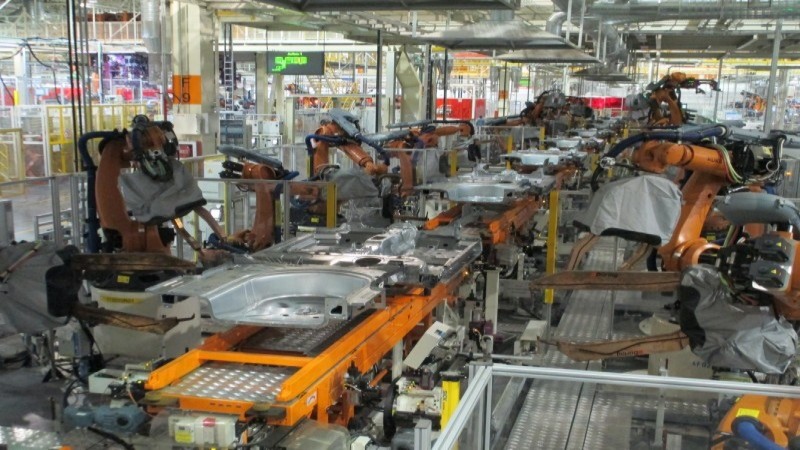
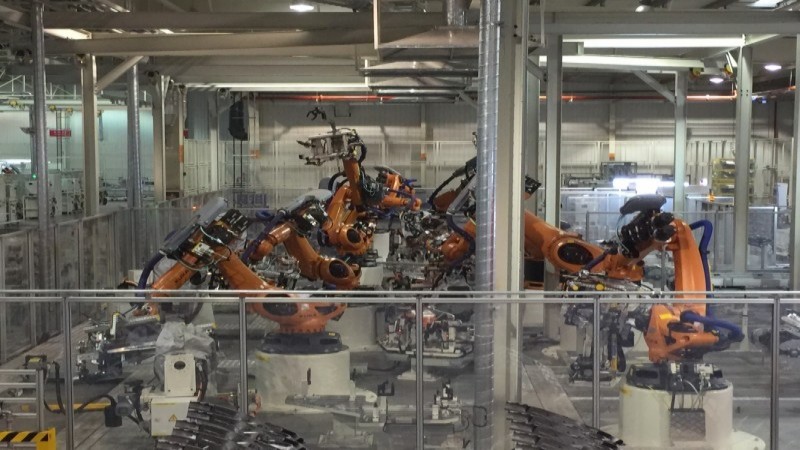
The biggest gains usually come where weld paths are repetitive, access is stable, and post-weld correction is costly.
That is why welding automation often works well in structural fabrication, heavy equipment, automotive components, and pressure vessel manufacturing.
The real value is not just faster welding. It is fewer defects, less grinding, less rework, and better process consistency.
ROI Is Bigger Than Labor Savings
Too many automation decisions focus only on labor reduction.
In reality, the strongest ROI often comes from removing post-weld waste: straightening, grinding, repair welding, repeated inspection, scrap, and production delays.
A better model is total cost of quality. If automation reduces distortion, rework, and quality leakage, it may pay off faster than labor-based calculations suggest.
The biggest cost is often not the weld itself. It is everything that happens after a bad weld.
The Hidden Friction in Automated Welding Cells
Some of the most frustrating automation problems are not programming issues.
A weld cell can look perfect on paper and still underperform because of invisible friction: residual magnetism, poor grounding, electrical noise, or unstable current return paths.
Take arc blow. Residual magnetism can deflect the arc and cause spatter, porosity, or incomplete fusion. Poor grounding can also disrupt weld stability and system communication.
These details are not glamorous, but they often decide whether an automated cell runs smoothly or becomes a troubleshooting project.
Traceability and Virtual Commissioning
Modern automation also improves traceability. Good systems connect welding parameters, program history, alarms, and inspection data into one usable record.
That makes quality problems easier to investigate and supports stronger production control.
Virtual commissioning adds another advantage. By simulating the system before installation, manufacturers can catch logic, timing, and integration problems early, when fixes are cheaper and far less painful.
Are You Ready for Welding Automation?
Not every plant should automate right away.
You are more likely to be ready when part geometry is repeatable, fixtures are mature, procedures are controlled, and quality losses are measurable.
You are less ready when drawings change constantly, fit-up is inconsistent, or production depends on one experienced operator making constant adjustments.
Automation works best when there is already some process discipline to build on.
How to Choose the Right Strategy
Start with the real bottleneck, not the equipment brochure.
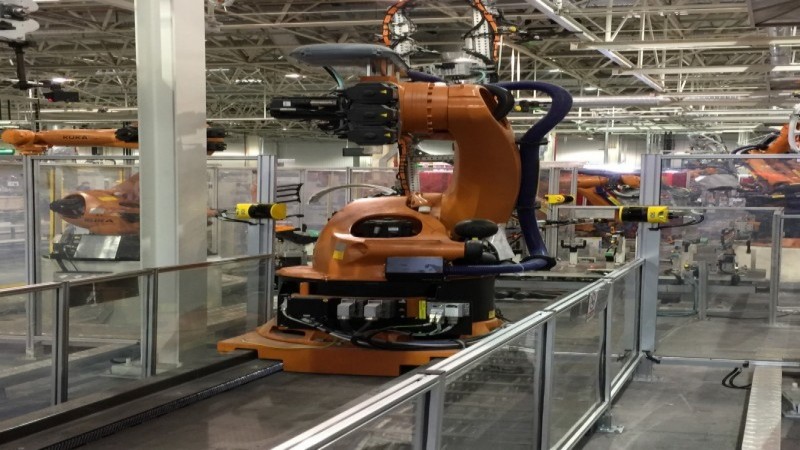
Ask what is actually costing money: throughput, weld variation, distortion, inspection burden, traceability gaps, or labor shortages. Then ask how stable your parts and joints really are in production.
The best automation strategy is the one that removes uncertainty from the whole joining process, not just the weld path.
FAQs
1. Why do welding automation projects fail?
Most failures come from unstable upstream conditions, such as poor fit-up, weak fixturing, thermal inconsistency, grounding issues, or uncontrolled part variation.
2. Is welding automation only worthwhile for high-volume production?
No. It can also make sense when rework, traceability demands, labor shortages, or quality losses are significant.
3. What is the difference between deterministic and adaptive welding automation?
Deterministic automation depends on stable parts and fixtures. Adaptive automation uses sensing and correction to handle real-world variation.
Conclusion
Welding automation is not just a labor-saving tool. It is a way to control the full precision chain, from part condition to thermal behavior to downstream quality.
The manufacturers that benefit most treat automation as process engineering, not machine shopping. When the process is stable, automation improves not only speed, but predictability, quality, and total manufacturing performance.
Build a Welding Process That Scales
Make Automation Work in the Real World
If your team is dealing with distortion, rework, unstable fit-up, or inconsistent weld quality, the right automation strategy can improve far more than cycle time. A strong partner should understand fixturing, thermal control, sensing, and real production conditions, not just robot programming.
Contact us today to discuss your parts, tolerances, and quality goals. We can help you determine whether deterministic or adaptive welding automation is the right fit for your application.