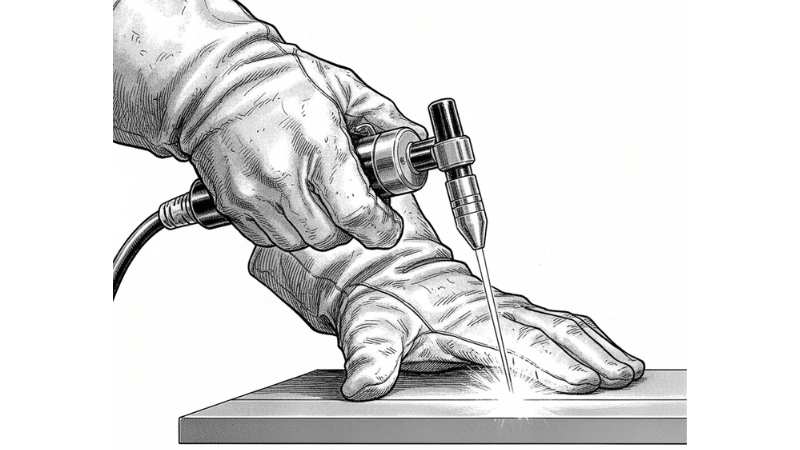
Plasma arc welding (PAW) is often described as an upgraded version of TIG—but that description misses the point.
The real difference isn’t just performance. It’s control. PAW is built for consistency, not flexibility—which is exactly why it works brilliantly in some shops and fails in others.
What Is Plasma Arc Welding, Really?
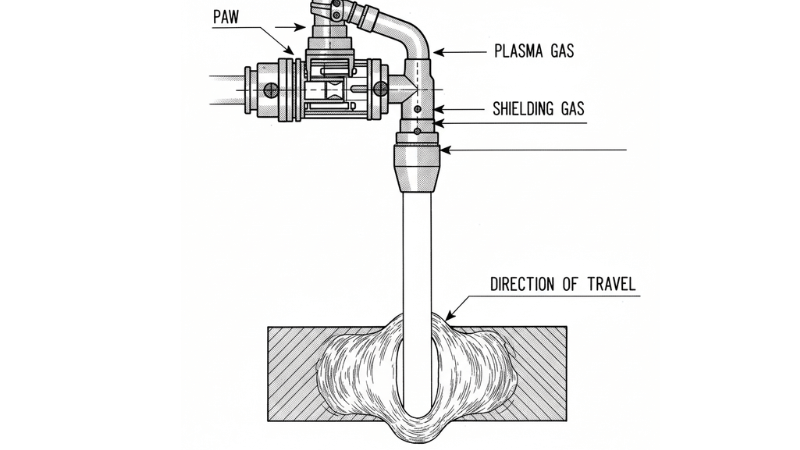
At its core, plasma arc welding is a highly controlled evolution of TIG welding, where the arc is forced through a fine nozzle to create a concentrated plasma jet.
This seemingly small change has a big impact. Instead of relying heavily on operator skill to stabilize the arc, PAW delivers a more stable, constricted arc with predictable penetration behavior. That means fewer variables in the process and more repeatable results.
In practical terms, operators shift from “managing the arc” to managing parameters like current, gas flow, and cooling stability. This is why PAW is often favored in environments where consistency matters more than flexibility.
Why Plasma Arc Welding Excels in Production
The real strength of PAW isn’t just precision—it’s repeatability at scale.
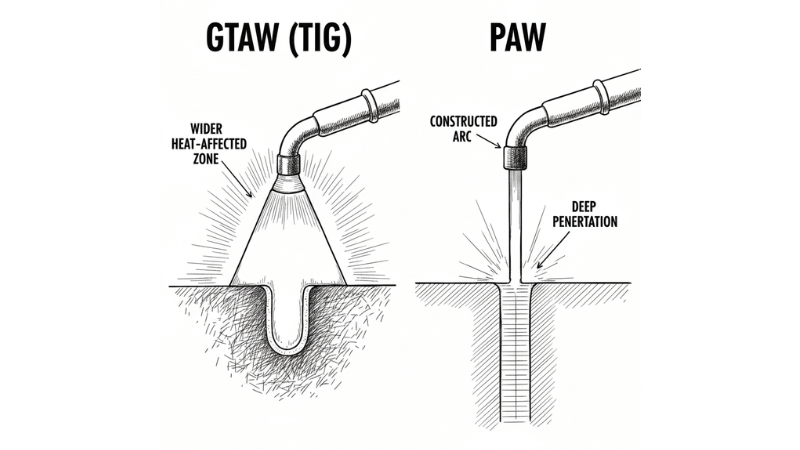
In production environments, the challenge is rarely making one perfect weld. The challenge is making thousands of identical welds without constant adjustments. PAW addresses this by producing consistent penetration depth and a narrower heat-affected zone, especially when working with thin or high-value materials like stainless steel.
As production volume increases, even small inconsistencies become expensive. Variations lead to rework, inspection failures, and downtime. PAW reduces these risks by stabilizing the welding process itself, which is why it integrates naturally with automated and robotic systems.
highlight that process stability is a key reason PAW is widely used in aerospace and medical manufacturing, where repeatability is non-negotiable.
Where Plasma Arc Welding Falls Short
PAW doesn’t usually fail because of performance—it fails because of mismatch with the application.
The system is inherently more complex. It requires precise control over gas flow, nozzle condition, and cooling systems. This increases both the initial investment and the operational discipline required to keep the process stable.
There’s also a trade-off in flexibility. TIG welding allows operators to quickly adapt to different materials, joint types, and conditions. PAW, by contrast, performs best when parameters remain stable and repeatable.
So in environments where jobs change frequently or production volumes are low, PAW can introduce unnecessary complexity without delivering meaningful benefits.
PAW vs TIG: The Decision Isn’t About “Better”
The comparison between PAW and TIG is often oversimplified. In reality, the choice depends on what your operation prioritizes.
If your goal is process consistency, controlled penetration, and scalability, PAW offers clear advantages. It reduces operator variability and supports automation, making it ideal for high-volume or high-precision applications.
If your priority is flexibility, lower cost, and adaptability, TIG remains the more practical choice. It allows for quick adjustments and works well in environments where production conditions vary frequently.
The key question isn’t which process is superior—it’s whether your workflow demands repeatability or flexibility.
Real Applications Where PAW Makes Sense
Plasma arc welding is most valuable in industries where weld quality is tightly controlled and directly tied to performance.
In aerospace manufacturing, consistent weld penetration is critical for structural reliability. PAW helps reduce variability, simplifying both inspection and compliance.
In medical device production, particularly with thin stainless steel components, excessive heat or inconsistency can compromise both function and cleanliness. PAW provides controlled heat input and precise weld profiles, which are essential in regulated environments.
It is also widely used in automotive electronics and sensor manufacturing, where small components require repeatable, high-quality welds without distortion.
Safety and Operational Considerations
Like all high-energy welding processes, PAW introduces risks including UV radiation, fumes, and high temperatures. Proper ventilation, shielding, and personal protective equipment are essential.
For official safety guidelines, refer to https://www.osha.gov/welding-cutting-brazing
Beyond safety, the more important limitation is operational fit. PAW is designed for controlled environments. It performs best when variables are minimized and processes are standardized.
How to Know If PAW Is Right for You
Instead of focusing on features, the better approach is to evaluate your production needs.
If your operation requires consistent weld quality across batches, tight process control, or future automation, PAW often delivers long-term value despite higher upfront costs.
If your work is highly variable or budget-sensitive, the added complexity may outweigh the benefits.
Quote Request Template (Copy & Paste)
To get accurate and fast supplier feedback, use this template:
Professional Quote Request Template
Engineered Solutions for High-Spec Welding Integration
Frequently Asked Questions
Is plasma arc welding better than TIG for most jobs?
Not necessarily. PAW provides better consistency and penetration control, but TIG remains more flexible and cost-effective for general applications.
What’s the difference between plasma welding and plasma cutting?
Plasma cutting removes material using a high-energy jet, while plasma welding uses a controlled arc to join materials.
When should I choose PTA instead of PAW?
PTA is typically used for surface coating and wear-resistant overlays rather than standard welding applications.
Is plasma arc welding expensive?
The initial investment is higher, but in high-volume production, improved consistency and reduced rework can offset the cost.
Conclusion
Plasma arc welding isn’t a universal upgrade to TIG—it’s a different tool designed for a different purpose.
When consistency, repeatability, and process control are critical, PAW delivers clear advantages. But in flexible, low-volume environments, its complexity can outweigh its benefits.
Choosing the right process comes down to aligning technology with your production reality.
CTA: Get the Right Plasma Welding Solution
Choosing plasma welding equipment isn’t just about specs—it’s about matching the process to your real production conditions. We help manufacturers evaluate materials, thickness, and output requirements to deliver stable, repeatable PAW solutions that actually perform on the shop floor.
Whether you’re transitioning from TIG or planning automation, we provide practical guidance—not guesswork.
Contact us today to get a tailored recommendation or fast quotation.