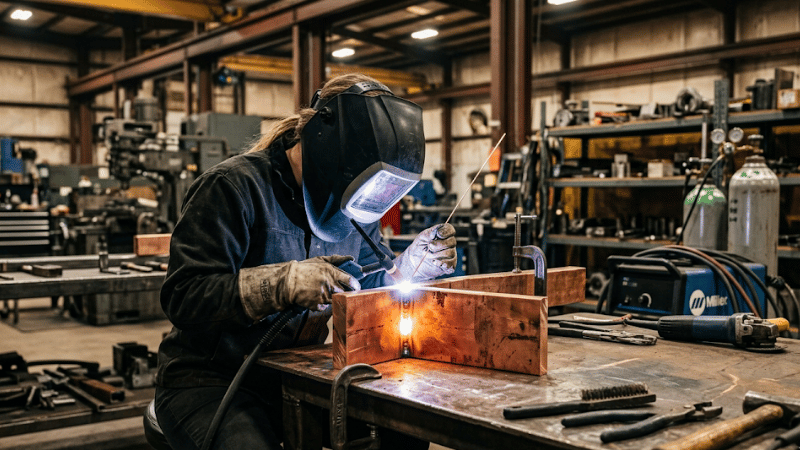
Yes, copper can be welded. But it does not behave like steel. It pulls heat away from the joint so fast that many first attempts fail before the puddle even gets comfortable.
That is the real issue behind welding copper: not just “high conductivity,” but the brutal copper heat sink effect. This guide explains how to handle it, when to use TIG or MIG, and when brazing may be the smarter move.
Why Copper Is So Hard to Weld
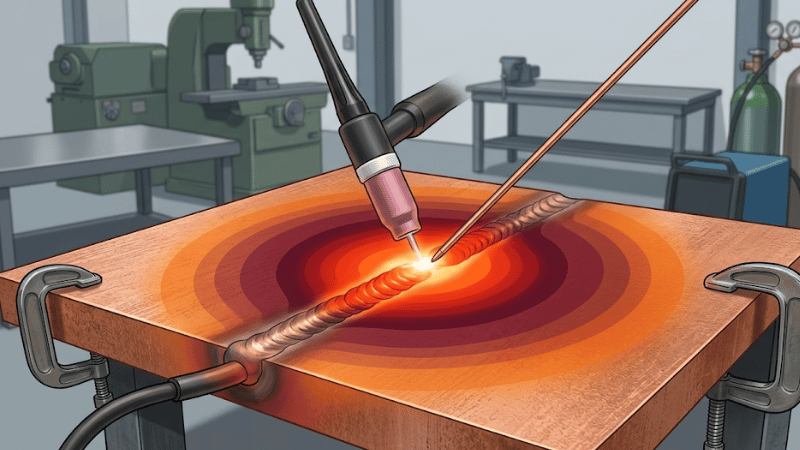
Copper conducts heat extremely well, which sounds nice until you try welding it. Instead of keeping heat near the arc, it drags it into the rest of the workpiece. The result is weak puddle formation, poor penetration, and a machine that suddenly feels smaller than its price tag suggested.
Thickness makes this worse. Thin copper can be manageable, but heavy sections soak up heat like a sponge with a grudge. That is why process choice, preheat, filler, and shielding gas matter so much before you ever strike an arc.
Copper Grade Matters: C11000 vs C12200
Not all copper welds the same. C11000 copper offers excellent conductivity, which is great for electrical performance but less helpful when you are trying to keep heat in the joint.
C12200 copper is phosphorus-deoxidized and is often easier to fabricate and join in real-world applications. That difference in chemistry can affect porosity risk, weld quality, and filler selection.
This is where many articles go soft. They say “weld copper carefully,” which is technically true and about as helpful as saying “cook steak with heat.” In practice, the grade can change the whole welding strategy.
Weld, Braze, or Solder?
Welding makes sense when you need a fused joint with higher structural integrity or service performance.
Brazing is often the better choice when lower heat input, easier joining, and less distortion matter more than a full fusion weld.
Soldering is usually enough for lower-load or lower-temperature applications. So yes, you can weld copper, but sometimes the smarter question is whether you should.
Best Welding Methods for Copper
TIG welding copper is usually the best option for control, cleanliness, and precision. It works well for tubing, thinner material, and applications where appearance matters.
MIG welding copper becomes more practical on thicker sections or production work. It delivers higher deposition and can help overcome copper’s heat-hungry behavior faster.
Stick welding exists, but for most modern copper work, the real choice is TIG, MIG, or brazing.
TIG Welding Copper: What Matters Most
When people ask how to weld copper, TIG is often the first serious answer. But copper needs real heat, solid prep, and a setup that works as a system.
Start with cleaning. Remove oil, dirt, and oxide thoroughly. Copper does not forgive contaminated surfaces, and dirty prep often shows up as porosity or unstable arc behavior.
Then manage heat properly. Preheat, amperage, and travel speed work together. If one is off, the others usually have to compensate, and copper is not known for generosity.
Torch capacity also matters. On heavier copper, a light-duty setup can become a regrettable life choice. Use a torch and tungsten sized for the actual amperage demand, not the one you hoped the job would need.
Choose filler metal based on grade and application. Random red-colored rod selection is not a process. It is arts and crafts with consequences.
MIG Welding Copper: When It Makes More Sense
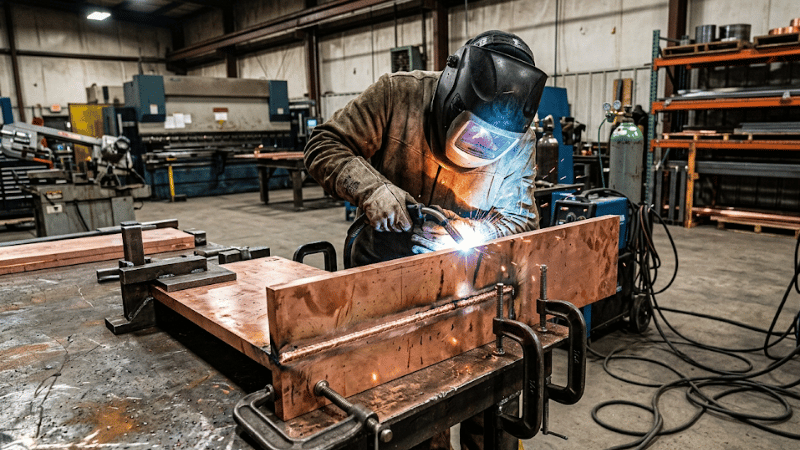
MIG works best when the copper section is thicker and productivity matters. It can deliver more filler and heat into the joint more quickly, which helps offset the heat sink effect.
That said, MIG is less refined than TIG on small, delicate, or cosmetic work. If you are welding thin tubing or highly visible joints, TIG usually stays ahead.
If you are dealing with heavier copper fabrication and need speed, MIG starts looking very attractive.
Filler Metals and Shielding Gas
This is another place where generic articles undersell the real issue. Pure argon is common, but it is not always enough for copper.
Helium shielding gas for copper welding can improve heat transfer and help with penetration and puddle formation. Argon-helium blends are especially useful when copper is acting like a heat thief and your arc needs extra punch.
But shielding gas is not magic. It cannot fix poor prep, weak equipment, or the wrong base material. If the setup is flawed, better gas just helps the flaw arrive faster.
How to Prepare Copper for Welding
Preparation starts with clean surfaces and proper fit-up. Remove contaminants, clean oxides, and make sure the joint is supported and aligned.
For thicker copper, plan for preheat before you begin. Waiting until the first pass fails is not a strategy. It is just a very expensive way to become humble.
Also remember safety. Welding copper still involves hot work, fumes, UV exposure, and burn hazards. Ventilation, PPE, and hot-metal handling are all part of the job.
Common Copper Welding Problems
If the puddle will not form even at high amperage, the usual causes are rapid heat loss, not enough preheat, or insufficient heat input for the material thickness.
If penetration is weak, the issue may be gas choice, travel speed, joint design, or simply using the wrong process for the job.
If porosity appears, look first at contamination, cleaning quality, and copper grade. Sometimes the real problem is not your technique. It is the material quietly refusing your assumptions.
A Practical Way to Choose the Right Method
Start with the copper grade. Then look at thickness and joint design. After that, decide what matters most: strength, conductivity, appearance, or speed.
Use TIG for thin sections, tubing, precision work, and cleaner-looking welds. Use MIG for thicker copper, faster production, and higher deposition. Use brazing when lower heat input and lower complexity are more valuable than a fusion weld.
The best method is not the fanciest one. It is the one that matches the job without starting a fight with physics.
FAQs
Can you TIG weld pure copper successfully?
Yes. TIG can weld pure copper very well, but success depends on sufficient heat input, proper cleaning, correct filler, and sometimes preheat or helium-blend shielding gas.
Why is copper harder to weld than steel?
Because copper pulls heat away from the weld zone much faster, making puddle formation and penetration harder to achieve.
Does the copper grade really matter when welding?
Yes. Grades like C11000 and C12200 differ in chemistry and welding behavior, which can affect porosity risk, filler choice, and process selection.
Conclusion
Copper is absolutely weldable, but it demands respect. The main problem is not just conductivity in theory. It is the very practical fact that copper pulls heat away from the weld zone fast enough to punish weak setups and lazy prep.
In many applications, TIG welding copper is the best place to start. For thicker sections, MIG welding copper may be the more efficient answer. Either way, successful copper welding starts before the arc—with the right grade, the right heat strategy, and the right expectations.
Need Help Choosing the Right Copper Welding Setup?
If your project involves copper tubing, busbars, or heavy-section copper fabrication, choosing the right process early can save time, scrap, and a surprising amount of frustration. The right partner can help match copper grade, filler, gas, and welding method to your actual production needs.
Contact us today to discuss your copper application and get practical guidance on TIG, MIG, consumables, and setup strategy.