Welding automation is being re-evaluated because manual welding is getting harder to scale. Skilled labor is tighter, quality expectations are higher, and rework is still expensive.
This guide explains what a welding automation system includes, where it creates value, when it does not, and how to choose the right setup without overbuying.
Why Welding Automation Is Being Re-evaluated Now
The pressure is coming from three directions: labor shortages, repeatability demands, and throughput targets.
For many manufacturers, the real problem is not just finding labor. It is finding qualified welders fast enough, especially in TIG pipe and tube applications where skill requirements are high. That is why automation is now being evaluated not only for speed, but also for process stability and easier knowledge transfer.
What Competitor Articles Usually Miss
Most articles say automation improves quality and productivity. That part is true, but incomplete.
What buyers really need to know is whether automation fits their volume, variability, fixturing discipline, and internal support capability. The overlooked issues are usually fixturing, programming, operator training, validation, and change management. Those details determine whether automation delivers ROI or just creates a more expensive headache.
What Is a Welding Automation System?
A welding automation system is the full production solution used to automate welding tasks. It includes the welding process, motion control, fixtures, software, safety systems, and operator workflow.
Many buyers use “automated welder” to describe the visible machine, but the machine is only one part of the system. The full result depends on the power source, torch or weld head, robot or motion platform, part positioning, HMI, sensors, and guarding.
Manual, Mechanized, Semi-Automatic, and Fully Automatic Welding
Manual welding is the most flexible, but it depends heavily on operator skill and consistency.
Mechanized welding adds guided motion or support equipment while the operator still controls much of the process. Semi-automatic welding moves a bit further, with some functions machine-assisted but execution still operator-led.
Fully automatic or robotic welding is best for repeatable parts, stable joints, and meaningful production volume. A simple rule works well: the more repeatable the part and the higher the weld volume, the stronger the case for automation.
Which Automatic Welding Processes Can Be Automated?
Many common processes can be automated. MIG/GMAW is often the easiest starting point because it is productive and widely used.
TIG/GTAW can also be automated, especially when precision matters. Orbital welding automation is a strong fit for repeatable tube and pipe applications.
FCAW, resistance welding, and spot welding are also common automation candidates. Laser and hybrid processes can be automated too, but they require tighter fit-up control, stronger safety planning, and more disciplined process development.
Where Welding Automation Creates the Most Value
Automation works best on repeatable parts with repetitive welds. That is where consistency and productivity gains are easiest to capture.
High-volume, repeatable parts are the obvious fit. Long welds, fatigue-heavy tasks, strict quality requirements, and poor ergonomic conditions are also strong candidates.
It is especially valuable where weld quality consistency and traceability matter, such as structural fabrication, pressure vessels, pipe and tube, automotive, transport, and heavy equipment.
When Welding Automation Does Not Make Sense Yet
Automation is a weak fit when parts vary too much, upstream quality is inconsistent, or fixturing is poor.
If the part is not presented the same way each time, the system may repeat defects very efficiently. That is why welding fixture design often matters as much as the automation hardware.
Low volume and unstable demand can also weaken the business case. In highly custom one-off work, manual or semi-automatic approaches may still be the better choice.
Benefits of a Welding Automation System
The first major benefit is welding throughput improvement. Automated systems can increase arc-on time and reduce idle handling.
The second is more predictable quality. Stored parameters, repeatable motion, and stable positioning reduce variation between operators and shifts.
Other benefits include less rework, better labor utilization, improved ergonomics, and stronger process control. In many plants, the biggest gain is not replacing people, but allowing skilled welders to focus on validation, troubleshooting, and higher-value tasks.
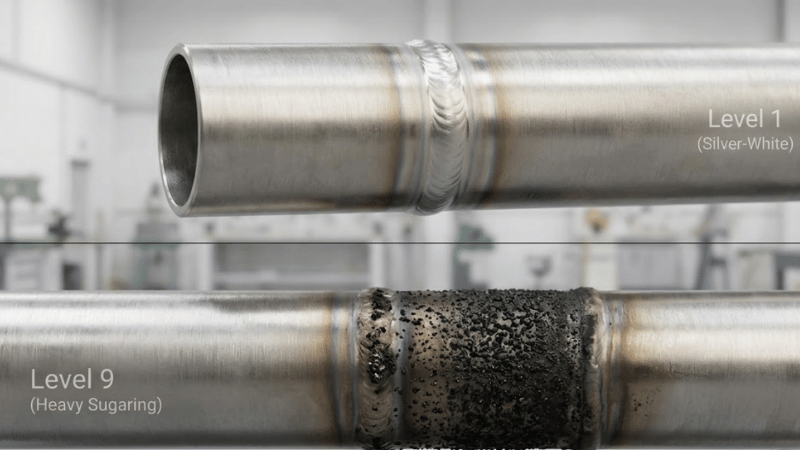
Tradeoffs, Risks, and Limitations
The purchase price is only part of the cost. Integration, fixturing, training, maintenance, and ramp-up can add more than buyers expect.
Programming time is often underestimated. So is the importance of fixture quality. If part presentation is unstable, even a good cell will struggle.
Maintenance and support also matter. Buyers should evaluate spare parts, service response, and downtime risk early. Just as important, teams adopt automation more successfully when it is introduced as production support, not as a threat.
How to Evaluate Whether Automation Is Worth It
Start with a simple checklist. Are the parts repeatable? Is weld volume meaningful? Is quality inconsistent? Is labor availability limiting output? Is takt time under pressure?
If the answer is yes to several of those, automation deserves a serious review.
A basic welding automation ROI model should include labor savings, throughput gains, scrap or rework reduction, downtime assumptions, training cost, and ramp-up time. Usually, the right level of automation creates more value than the highest level.
Analyze Your Potential: ikratz Production Efficiency Auditor
Theoretical ROI models are useful, but seeing the impact on your specific production line is what drives better business decisions.
Don’t let “close enough” be the standard for your facility. Use our interactive auditor below to see how much production capacity you are currently losing to manual inconsistency and rework. This tool calculates your potential gain based on the ikratz Expert Parameter Library—our core technology that converts master-welder logic into repeatable, digital results.
ikratz Production Efficiency Auditor
Quantify the ROI of ikratz automation vs. manual TIG inconsistency.
ikratz Solution Impact Summary:
*Analysis accounts for ikratz Expert Parameter Library reducing setup time and manual fatigue.
ROI calculations based on 2026 industrial labor standards.
Is your potential gain over 100%? That is typical for facilities moving from manual TIG to the ikratz MWF series. This isn’t just about speed; it is about recovering the hundreds of hours currently wasted on “fixing” joints that should have been perfect the first time.
How to Choose the Right Welding Automation System
Start with the weld application, not the machine. Material, joint type, access, fit-up variation, quality requirements, and volume should drive the decision.
Then compare systems by process fit, joint complexity, footprint, changeover needs, controls integration, documentation, and support.
One important question to ask vendors is whether the system includes guided recipes or built-in parameter logic that reduces dependence on highly experienced operators. Similar hardware can produce very different real-world results depending on how much process intelligence is built into the controls.
Human + Machine: How Roles Change in an Automated Welding Environment
The most practical way to view automation is human plus machine, not human versus machine.
In real production, automation usually shifts experienced welders into higher-value roles like procedure development, validation, troubleshooting, and supervision. It allows less-experienced operators to handle more routine execution when the process is stable.
This is especially important in TIG pipe and tube welding, where many companies face a serious talent gap. In 2026, the problem is not only that qualified TIG welders are hard to hire. It is that they are hard to train quickly enough.
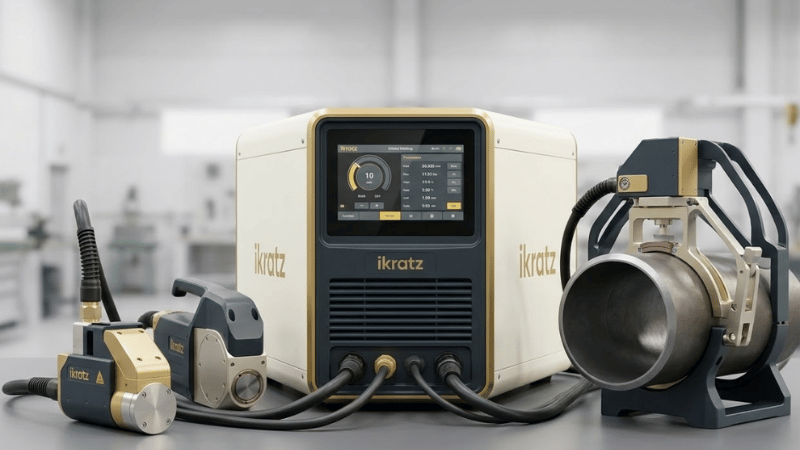
This is where ikratz provides a real solution. Our Expert Parameter Library converts years of welding process logic into digital instructions. On the MWF series HMI, the operator enters the pipe diameter and wall thickness, and the system automatically calculates the optimal pulse current and rotation speed.
That means key welding know-how is no longer locked inside one veteran operator. It becomes part of the production system. Instead of building parameters manually, the operator follows a guided workflow based on embedded process expertise.
The result is a practical de-skilling effect: shorter ramp-up time, less dependence on scarce TIG specialists, and more scalable consistency. In suitable applications, even an apprentice with only a few days of experience can achieve first-pass weld acceptance rates above 99%.
Automation does not remove craftsmanship. It makes craftsmanship more repeatable and easier to transfer.
Welding Automation News and Trends to Watch
The biggest trend is accessibility. Automation is becoming more realistic for smaller and mixed-volume manufacturers, especially when systems are easier to program and deploy.
Another trend is better digital control, stronger quality traceability, and more interest in sensing and adaptive process control. The important point is to separate marketing hype from real operational value.
A useful system should make production easier, more consistent, and less dependent on rare skills.
Conclusion
A welding automation system is not just a machine purchase. It is a process decision.
The best solution matches the weld application, production volume, repeatability, fixturing quality, and internal support capability. Manufacturers make better decisions when they evaluate both ROI and implementation risk—and when they choose systems that reduce dependence on hard-to-find welding talent through embedded process intelligence.
CTA: Build Weld Consistency Without Depending on Rare TIG Specialists
If your team is dealing with TIG labor shortages, unstable weld quality, or slow operator ramp-up, ikratz can help. Our approach combines automation with embedded welding expertise, so your production team can achieve more consistent results with less dependence on scarce high-level operators.
Contact us today to discuss your pipe or tube welding application, request a quote, or learn how the MWF series and Expert Parameter Library can help improve weld consistency and reduce training pressure.
Frequently Asked Questions
What is a welding automation system?
It is the complete production solution used to automate welding tasks, including the welding process, motion control, fixtures, software, safety systems, and operator workflow.
When does automated welding make the most sense?
It makes the most sense when parts are repeatable, weld volume is meaningful, quality consistency matters, and labor or throughput constraints are limiting performance.
What is the biggest mistake buyers make with welding automation?
Many buyers focus on the machine first and overlook part consistency, fixturing, training, and process validation, which are often the real drivers of success or failure.