Introduction to Automated TIG and Orbital Welding
Automated TIG welding and orbital welding are revolutionizing how industries approach welding efficiency and quality. Automated orbital welding is a leading technology in this shift, offering advanced automation features and significant advantages over manual welding, especially for pipeline and industrial projects. These advanced welding methods address common problems in manual welding such as inconsistency, operator fatigue, and material waste. By automating the welding process, companies can achieve repeatable, high-quality results that meet stringent industry standards.
The demand for precision in sectors like pressure equipment, semiconductor manufacturing, and piping systems has exposed the limitations of traditional TIG welding. In response, automated TIG and orbital welding technologies have become indispensable for delivering superior weld quality while reducing production time and costs. These technologies utilize an automated process to perform traditional welding tasks, minimizing human intervention and maximizing efficiency and consistency. This article explains why these methods matter and how they enhance operational efficiency for manufacturers.
You will learn how automated TIG welding and orbital welding improve weld consistency, reduce defects, and increase throughput, providing practical insights to optimize your welding processes and ensure compliance with industry certifications. Automated welding further improves efficiency, quality, and safety across various applications, making it a valuable solution for modern manufacturing. This understanding helps you leverage cutting-edge welding technology to streamline manufacturing workflows and improve product reliability.
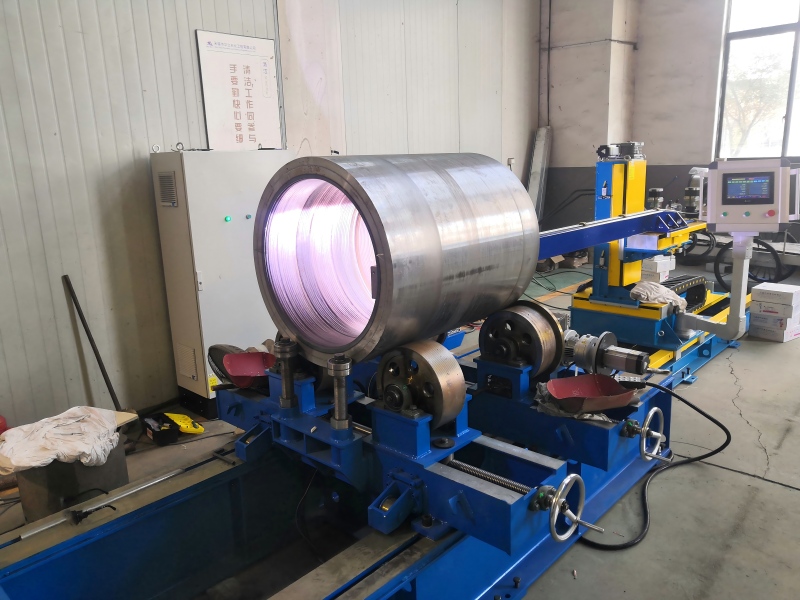
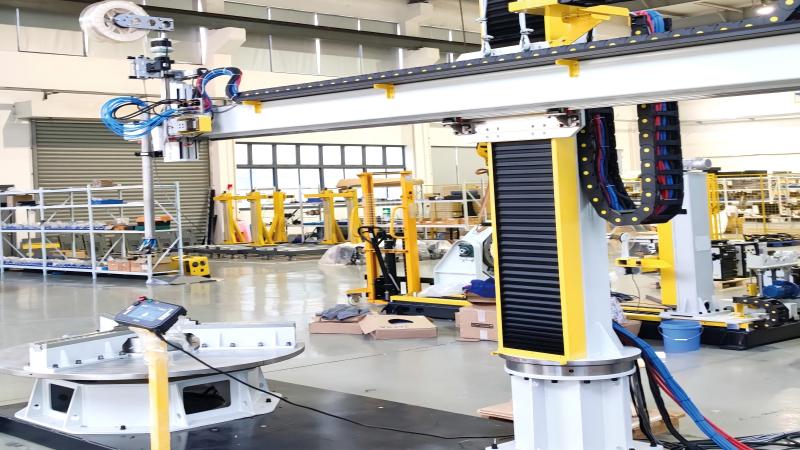
Automated TIG welding automates the gas tungsten arc welding process with precision controls, while orbital welding rotates the welding electrode around the workpiece, enabling impeccable welds on round pipes and tubes. An automated welding system integrates welding robots, power sources, supporting equipment, and control interfaces to ensure precision, safety, and high-quality welds within a fully automated process. Both methods improve consistency by eliminating human error, which often causes weld defects or rework in manual processes.
These advancements are transforming the welding industry by setting new standards for efficiency, quality, and safety across manufacturing sectors.
Key benefits include:
- Uniform weld penetration
- Reduced spatter and contamination
- Stable heat input control
- Enhanced reproducibility even for complex weld geometries
Operation setups use programmable parameters allowing fine-tuning for different materials such as stainless steel, aluminum, and titanium. This flexibility enables manufacturers to meet strict quality codes like ASME Section IX or ISO 15614 without sacrificing throughput.
Automated TIG and orbital welding also improve safety by removing operators from hazardous positions and minimizing exposure to harmful fumes or UV radiation. Moreover, the controlled environment reduces the need for extensive post-weld inspections, accelerating project delivery timelines.
In summary, automated TIG and orbital welding comprehensively address common welding challenges by increasing precision and consistency. These technologies are essential for industries focused on maximizing efficiency and maintaining exceptionally high-quality welds. Learn more about welding standards and certifications on the iKratz website.
Key Advantages of Orbital Welding Over Conventional TIG Welding
Automated TIG Welding has seen a significant transformation thanks to orbital welding technology. Orbital welding is the preferred method in many high-tech industries because it delivers superior quality, consistency, and compliance with regulatory standards compared to manual TIG welding and other approaches. Understanding the key advantages of orbital welding over conventional TIG processes is essential for businesses aiming to improve both efficiency and quality.
Orbital welding automates the welding torch movement around the workpiece, which drastically reduces human errors inherent in manual TIG welding. This automation allows the process to produce consistent welds with minimal variation. As a result, manufacturers can achieve higher throughput and repeatability while lowering rework rates. This advantage alone often justifies the investment in orbital systems, especially in industries demanding strict quality control such as aerospace, pharmaceuticals, and semiconductor manufacturing.
Orbital welding offers several critical benefits compared to conventional TIG welding and traditional welding methods:
- Uniform Weld Quality: The machine-controlled rotation delivers flawless, consistent welds over long production runs. This reduces the risk of defects like porosity, cracks, or incomplete fusion.
- Improved Productivity: By eliminating manual manipulation, orbital welding accelerates cycle times and allows continuous operation, minimizing downtime.
- Enhanced Precision: Programmable parameters ensure repeatable weld profiles with tight tolerances, critical in specialized applications.
- Reduced Operator Skill Dependence: Automation mitigates the variability that comes from different welder proficiency levels, enhancing process reliability.
- Better Safety: Operators face fewer hazards as they are distanced from high-temperature zones and arc radiation.
To illustrate these benefits, the table below compares orbital welding and traditional TIG methods on key performance indicators:
| Feature | Orbital Welding | Conventional TIG Welding |
|---|---|---|
| Weld Consistency | High (machine-controlled) | Moderate to low (manual) |
| Productivity | Higher due to automation | Lower due to manual control |
| Skill Requirement | Lower, easier to train | High, dependent on welder |
| Defect Rate | Reduced and predictable | Higher variability |
| Safety | Improved through distancing | Moderate, direct exposure |
Such tangible advantages explain why industries place orbital welding at the core of their critical fabrication processes. The orbital weld produced by this method is precise and repeatable, meeting the highest standards required in demanding sectors. According to the iKratz, orbital welding can improve welding speeds by up to 50% while cutting defect rates in half compared to manual TIG welding.
In conclusion, orbital welding outperforms conventional TIG welding by enhancing weld quality and efficiency through automation and precision control. The orbital welding process, which involves automated, programmable welding around pipes or tubes, plays a crucial role in achieving high-quality, consistent results across various applications. Companies seeking to scale production without sacrificing standards should seriously consider orbital welding solutions.
For further insights into optimizing welding operations or exploring available orbital welding equipment, you can visit the iKratz official site
Core Components and Technology Behind Orbital TIG Welding
Automated TIG welding has transformed the precision and consistency of welds, especially in industries demanding high-quality standards. However, traditional manual TIG welding often struggles with repeatability and operator fatigue, leading to inconsistencies. Orbital TIG welding addresses these challenges by automating the welding head movement, offering controlled, repeatable welds that significantly improve efficiency and quality. The key components of an orbital TIG welding system include the motorized weld head, programmable controller, stable TIG power supply, sensors, and data logging software, all working together to ensure precision and reliability.
At its core, orbital TIG welding relies on a sophisticated mechanical system paired with advanced control technology and specialized equipment designed for high-precision applications. The primary components include a motorized welding head, a programmable controller, and specialized software. The weld head rotates 360 degrees around the workpiece, enabling uniform welds without operator intervention. Sensors monitor parameters such as arc length, current, and travel speed in real time, adjusting the process dynamically to maintain optimal conditions. This automation reduces human error and ensures the highest consistency even in demanding environments such as aerospace or pharmaceutical tubing.
Delving deeper, the technology integrates feedback loops to fine-tune weld parameters actively. The programmable logic controller (PLC) allows you to customize welding cycles for different materials and material thicknesses, adapting quickly to production needs. Besides mechanical precision, the TIG power supply’s stability plays a key role; it delivers a consistent current output crucial for controlled heat input and avoiding weld defects. Moreover, data logging capabilities facilitate quality assurance and regulatory compliance by recording welding parameters for each weld. Understanding these components helps industries realize why orbital TIG welding not only enhances efficiency but also strengthens quality control, supporting stricter standards and reducing waste.
| Core Component | Function | Key Benefit |
|---|---|---|
| Motorized Welding Head | Rotates around workpiece automatically | Ensures uniform welds every cycle |
| Programmable Controller | Manages welding parameters and movement | Enables repeatability and flexibility |
| Sensors & Feedback Loop | Monitors arc and adjusts in real time | Maintains consistent weld quality |
| Stable TIG Power Supply | Provides steady current | Prevents overheating and defects |
| Data Logging Software | Records welding parameters | Supports QA and traceability |
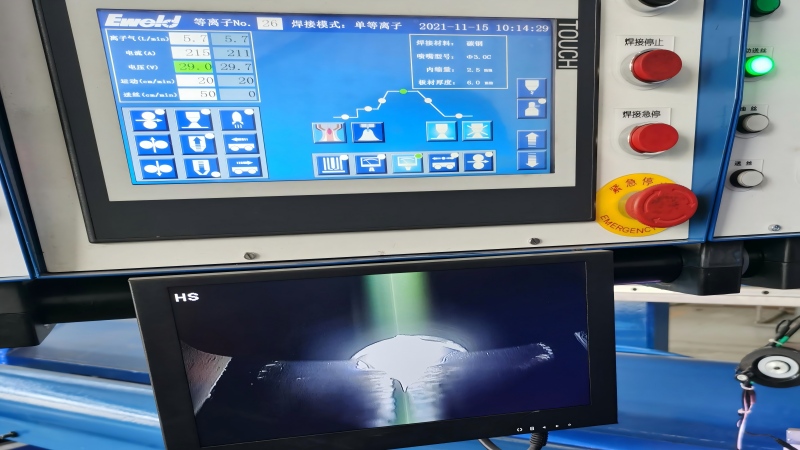
The welding head contains a tungsten electrode, which is essential for maintaining arc stability and producing high-quality welds. The TIG process, or tungsten inert gas welding, uses a non-consumable tungsten electrode and an inert shielding gas to protect the weld area from contamination, ensuring precise and clean welds.
Effective use of orbital TIG welding technology leverages these components to eliminate variability inherent in manual welding. For professionals seeking to boost productivity without compromising precision, understanding this system’s makeup is essential. Not only does it reduce labor costs, but it also minimizes rework by delivering consistent, defect-free welds. The system can be adapted to accommodate different material thicknesses by selecting appropriate weld head sizes and configurations.
Explore related insights on welding automation here. For technical standards governing orbital welding, the ASME Boiler and Pressure Vessel Code provides authoritative guidance, ensuring compliance and safety in critical applications.
Managing the weld cycle through programmable controllers is crucial for achieving optimal results, especially in multi-pass or complex welding operations.
Orbital Welding Heads: Precision Tools for Automated TIG Welding
Orbital welding heads are at the heart of automated TIG welding, delivering the precise control and repeatability that set orbital welding apart from traditional methods. These specialized tools are engineered to rotate seamlessly around a fixed workpiece, enabling the welding process to produce uniform, high quality welds on pipes and tubes of varying diameters and material thicknesses. By automating the movement of the welding torch, orbital welding heads virtually eliminate human error, ensuring that each weld is consistent and meets stringent industry standards.
One of the standout advantages of orbital welding heads is their adaptability. Available in a range of sizes and configurations, they can accommodate different tube diameters and wall thicknesses, making them suitable for a wide variety of welding applications. Whether you’re working with thin-walled stainless steel tubing or tackling thicker materials in demanding environments, orbital welding heads provide the precise control needed to achieve optimal weld parameters. Their compact design also allows for use in tight spaces where manual adjustments would be challenging or impossible.
By minimizing the need for manual intervention, orbital welding heads reduce the risk of defects and rework, streamlining the welding process and boosting productivity. This makes them an ideal solution for industries where weld quality and repeatability are non-negotiable. In summary, orbital welding heads are precision tools that empower manufacturers to achieve superior results in automated TIG welding, regardless of the complexity or constraints of the welding project.
Power Supplies: The Backbone of Consistent Orbital TIG Performance
A reliable power supply is fundamental to the success of any orbital welding system, serving as the backbone that ensures consistent and high quality welds throughout the welding process. In orbital TIG welding, the power supply works in tandem with orbital welding heads to deliver stable arc characteristics and precise control over critical welding parameters such as current, voltage, and gas flow. This synergy is essential for producing repeatable and precise welds, especially in applications where weld quality cannot be compromised.
Modern orbital welding power supplies are designed with advanced features that go beyond simply providing energy to the welding arc. They offer programmable controls, real-time monitoring, and data analysis capabilities that enable operators to fine-tune the welding process for optimal performance. By regulating welding current and gas flow, these power supplies help maintain a contamination-free environment and prevent common defects, resulting in uniform welds that meet or exceed industry standards.
The integration of quality control systems within the power supply allows for continuous oversight of the welding process, ensuring that any deviations in weld parameters are detected and corrected immediately. This not only enhances weld quality but also reduces labor costs by minimizing the need for manual inspection and rework. Selecting the right power supply for your orbital TIG welding system is therefore a critical step in achieving consistent, high quality welds and maximizing the efficiency of your welding operations.
Common Applications and Industries Using Orbital TIG Welding
Orbital TIG welding excels in industries where precision and consistency are vital. You will find it widely applied in sectors such as aerospace, pharmaceuticals, semiconductor manufacturing, food processing, power generation, and chemical plants. The method improves weld quality while reducing human error, making it ideal for high-stakes environments with strict regulatory requirements. Maintaining structural integrity is essential in these critical applications.
Digging deeper, orbital TIG welding proves invaluable in piping systems involving stainless steel pipes, carbon steel, or nickel alloys, especially when pipe joints must withstand high pressure and corrosive substances. For example, pharmaceutical and biotech manufacturers rely on its clean, repeatable welds to ensure contamination free welds and sterile environments, often utilizing closed weld heads to achieve this. Aerospace companies also adopt orbital techniques to join lightweight metals that demand uniform strength and minimal distortion. In power generation, durable welds are required to ensure the reliability of pipelines and equipment. The technology’s automated nature allows for tighter control over variables, such as shielding gas, enhancing repeatability in production runs and reducing downtime caused by weld defects. Proper surface preparation before welding is crucial to achieving optimal results and weld quality. For larger-diameter pipes, open weld heads are often used due to their flexibility and suitability for wire-fed applications.
Here is a concise overview of key industries and their orbital TIG welding uses:
| Typical Applications | Key Benefits | |
|---|---|---|
| Fuel tanks, hydraulic lines, airframe joints | Precision welds, lightweight metal compatibility | |
| Sterile piping, bioreactors | Contamination control, regulatory compliance | |
| Ultra-pure gas and chemical pipelines | High purity, minimal particle generation | |
| Food and Beverage | Sanitary tubing and process vessels | Easy cleaning, hygienic welds |
| Chemical Processing | Corrosion-resistant piping and reactors | Durability, leak-proof connections |
The ability of orbital welding to automate complex welds reduces operator fatigue and variability. This consistency lowers scrap rates and rework costs, contributing directly to operational efficiency. According to the American Welding Society, orbital TIG welding improves weld reproducibility by up to 60% compared to manual techniques. Additionally, compliance with standards such as ASME BPE ensures the welds meet stringent industry safety and quality requirements.
By understanding these applications and their demands, you can better appreciate how orbital TIG welding enhances manufacturing quality and throughput across critical industries.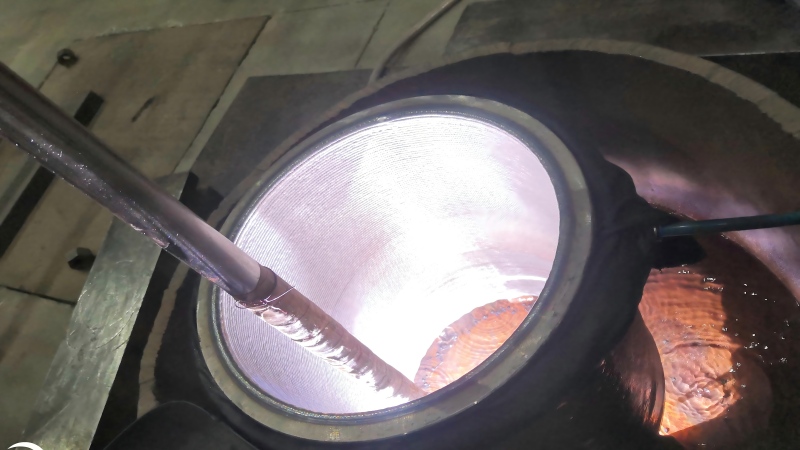
Challenges and Limitations of Orbital Automated TIG Welding
Orbital automated TIG welding offers remarkable precision and repeatability, but it also faces notable challenges and limitations. These constraints can impact its efficiency and suitability for certain applications. Understanding these issues helps you make informed decisions about when and how to adopt this technology.
One major limitation is the high initial investment. Orbital systems require costly equipment, including specialized welding heads, power supplies, and advanced control software. For smaller operations or low volume production, the upfront cost can outweigh the efficiency benefits. Additionally, the complexity of setup and programming poses a steep learning curve that demands skilled operators. This training expense and time delay can be barriers in fast-paced manufacturing environments.
Moreover, orbital welding struggles with complex joint geometries and variations in fit-up. Unlike manual TIG welding, it demands consistent, repeatable part positioning. Achieving a properly welded joint can be challenging when irregularities, misalignments, or contamination in the weld area are present, as these significantly degrade quality and may cause defects such as porosity or incomplete fusion. Hence, preparation and fixture precision are critical but can be expensive and time-consuming. In critical applications, a high-quality weld joint is essential to ensure durability and reliability.
Environmental restrictions also limit orbital TIG use. This technique requires a controlled atmosphere—usually inert gas shielding—to prevent oxidation. Applications in open or confined spaces where gas management is difficult face challenges maintaining weld quality.
| Description | Impact on Welding Process | |
|---|---|---|
| High Equipment Costs | Specialized orbital heads, power supplies | Limits adoption by small businesses |
| Operator Skill Requirements | Complex programming and setup | Increases training time and labor costs |
| Joint Geometry Restrictions | Requires consistent and precise fit-up | Not suitable for highly irregular parts |
| Environmental Constraints | Needs inert gas shielding for quality welds | Unsuitable in uncontrolled environments |
These limitations require careful consideration when implementing orbital automated TIG welding. Despite these challenges, its ability to deliver consistent, high-quality welds justifies the investment in many industries, such as aerospace and semiconductor manufacturing, where precision is paramount.
Learn more about welding system options here and explore recognized standards to deepen your understanding of the technology.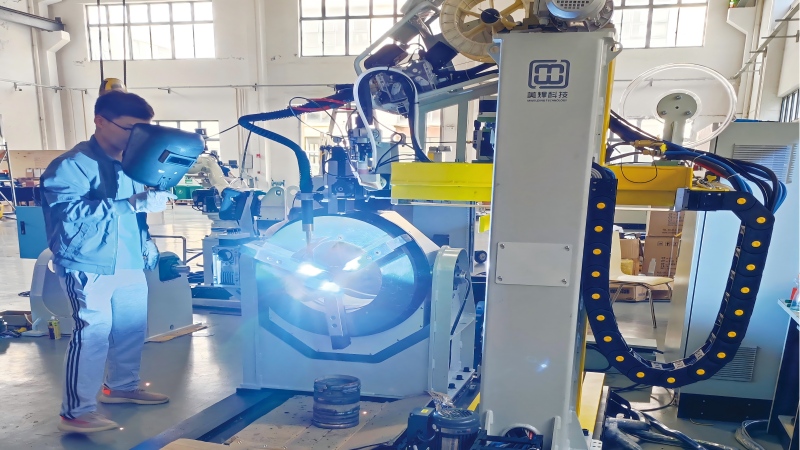
Innovations and Emerging Trends in Orbital TIG Welding
Orbital TIG welding constantly evolves, driven by innovation to enhance efficiency and quality. Recent advances include improved automation, intelligent monitoring, and adaptive control systems. These breakthroughs enable welders to achieve consistent and high-precision welds with reduced human intervention, directly addressing long-standing challenges in manual TIG welding.
Exploring these innovations reveals how orbital systems now integrate real-time data analytics and feedback loops. For instance, adaptive arc control adjusts welding parameters dynamically to maintain optimal penetration and bead shape. Moreover, advancements in robotic tooling and programmable weld heads enhance repeatability across complex geometries, benefiting industries such as aerospace and pharmaceuticals where precision is critical.
Key emerging trends also emphasize user-friendly interfaces and enhanced software analytics for easier operation and diagnostics. Enhanced sensor technologies detect weld defects earlier, allowing corrective actions mid-process. Additionally, integration with Industry 4.0 platforms facilitates seamless data sharing and remote monitoring, improving overall production insights and traceability.
These developments collectively push the boundaries of orbital TIG welding, providing welding professionals with tools that reduce errors, improve throughput, and maintain stringent quality standards. Embracing these innovations not only optimizes production but also supports compliance with rigorous international welding codes and certifications.
Alt text: Orbital TIG welding machine with adaptive control technology
How to Choose the Right Orbital Welding System for Your Needs
Choosing the right orbital welding system is crucial to improving welding efficiency and quality in automated TIG welding. You should consider the specific application, material compatibility, and control features to ensure the system meets your production demands. Proper selection directly impacts weld consistency, reduces human error, and boosts overall throughput.
To dive deeper, start by identifying your welding requirements: pipe diameter, wall thickness, and material type all influence the welding machine specifications. Next, evaluate the system’s automation level—some models offer full programmatic control, while others provide manual adjustments. Look for advanced features like real-time arc monitoring and data logging, which increase traceability and process control. Additionally, consider support for industry-standard certifications (e.g., ASME, ISO) to comply with quality assurance protocols. Budget constraints also matter, but don’t sacrifice reliability for cost. Consulting with manufacturers about maintenance, training, and software updates can prevent costly downtime. Finally, review user feedback and case studies to find systems proven to enhance productivity and weld integrity in similar applications.
| Factor | Key Considerations | Impact on Welding Performance |
|---|---|---|
| Application Scope | Pipe size, wall thickness, material type | Ensures system compatibility and weld quality |
| Automation Level | Manual, semi-automatic, fully automated | Affects process consistency and efficiency |
| Control Features | Arc monitoring, data logging, programmable control | Enhances precision and traceability |
| Compliance Standards | ASME, ISO, AWS certifications | Aligns with industry quality requirements |
| Manufacturer Support | Training, maintenance, software updates | Reduces downtime, supports long-term use |
Selecting a system based on these factors enables you to optimize orbital welding operations and achieve superior TIG weld quality and consistency.
By following these guidelines, you can confidently invest in an orbital welding system that suits your production needs and boosts welding outcomes.
Future Outlook: The Role of Orbital Welding in Industry 4.0
The role of orbital welding in Industry 4.0 centers on its ability to integrate automation with smart manufacturing processes, directly enhancing welding efficiency and quality. Orbital welding systems provide consistent, precise welds by eliminating human variability, which supports data-driven decision-making and predictive maintenance in Industry 4.0 environments. This combination drives productivity gains and reduces downtime in highly automated production lines.
Looking deeper, orbital welding’s adaptability aligns well with Industry 4.0’s digital ecosystem. Its integration with IoT sensors allows real-time monitoring and remote control, offering continuous feedback on weld quality and process stability. Manufacturers can leverage this data to optimize parameters and anticipate equipment failures before they occur. Additionally, orbital welding supports standardized procedures across complex geometries and materials, ensuring repeatability required in smart factories. As Industry 4.0 progresses, orbital welding will further evolve with AI-driven analytics and machine learning, transforming welding from a manual task into a fully automated, intelligent manufacturing step.
Conclusion
Automated TIG welding, especially orbital welding, significantly boosts welding efficiency and quality by providing consistent, precise welds with minimal human error. This technology addresses the common challenges of manual welding, such as variability and fatigue, allowing industries to maintain high standards and reduce rework rates.
Orbital welding machines consistently deliver repeatable welds crucial for industries like aerospace, pharmaceuticals, and semiconductor manufacturing. By automating the torch movement around the pipe or tube, they ensure uniform heat distribution and optimal weld bead shape. Such precision reduces defects like porosity and cracking, cutting downtime and saving costs.
In all, orbital welding elevates automated TIG welding by combining efficiency with unparalleled quality control. Investing in this technology helps you achieve tighter tolerances, improved productivity, and enhanced safety, all of which directly impact your operation’s bottom line and reputation in demanding markets.