If you’re searching welder salary, you’re probably trying to answer one simple question: “Am I getting paid fairly—or am I funding someone else’s boat?” This guide gives you a timestamped 2026 snapshot, then shows what actually changes your rate.
Updated Jan 30, 2026: refreshed national benchmarks (hourly + annual), added a practical “reality range,” and included overtime/per diem math so your plan is based on paychecks, not vibes.
Welder Salary 2026 Snapshot
2026 national benchmarks
Indeed’s U.S. welder hourly rate 2026 shows $23.98/hr, with a typical range $16.86–$34.10, based on 24.3k data points (updated Jan 26, 2026). (Indeed)
ZipRecruiter’s average welding salary 2026 is $46,302/year (as of Jan 29, 2026), which it converts to about $22.26/hr (range $14.18–$31.25). (ZipRecruiter)
The “reality range” you should actually use
Use these bands to anchor expectations for welder pay without falling for one magic “average”:
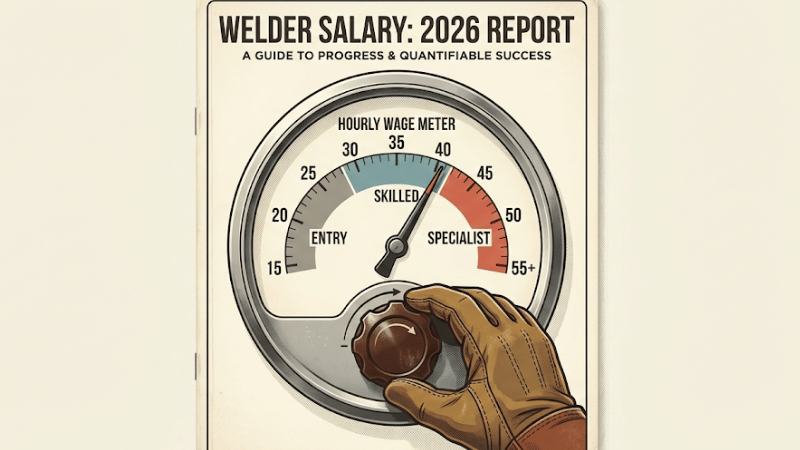
- Entry-level: $16–$20/hr
- Competent (solid shop/site value): $20–$28/hr
- High-skill / high-responsibility: $28–$40/hr
- Travel + heavy OT (effective): $35–$55+/hr
Sanity-check your area quickly: California shows $27.33/hr (updated Jan 25, 2026). (Indeed CA)
Los Angeles shows $29.32/hr (updated Jan 23, 2026). (Indeed LA)
Why numbers differ
What each source is “best at”
BLS is a stable baseline: median annual wage $51,000 (May 2024), with clear low/high percentiles for reality checks. (BLS OOH)
Job boards are faster-moving signals, but noisier: postings can skew by region mix, duplicates, and whether roles quietly include OT, per diem, or “welder + 6 other hats.”
Apples-to-apples translation
When comparing welder salary numbers, normalize these first:
- Median vs average (median is usually more “typical”)
- Hourly vs annual (what hours are assumed?)
- Base vs total (OT, shift diff, bonus, per diem)
- Per diem rules (often reimbursement, not wage) — check basics via GSA per diem rates. (GSA)
What actually changes your rate in 2026 (7 drivers)
The big levers employers pay for
Pay climbs when you reliably deliver higher-value outcomes: fit-up, code-quality work, fewer defects/rework, tougher materials, tighter tolerances, and taking responsibility without supervision babysitting.
Process and job type matter too: TIG precision, multi-process flexibility, shutdown/maintenance urgency, and ugly conditions (confined spaces, heights, weather, travel) often come with premiums.
Credentials and proof
Certs and tests don’t print money by themselves, but they open doors to better-paying roles—especially portable, performance-based credentials like AWS Certified Welder. (AWS)
Bold reality: when two welders claim the same skill, the one with test results + documented scope usually wins the rate conversation.
Pay ranges by experience + specialty (practical expectations)
Experience bands (what’s realistic)
Entry-level (0–2 years): You’re paid for reliability + learning speed. Quick jumps come from passing tests, improving fit-up, and adding a second process.
Mid-level (2–5 years): Raises often come from switching into higher-margin industries, tighter tolerances, and consistent results across positions/materials.
Experienced (5+ years): Top earners stack at least two: code work, specialty metals, shutdown/travel cycles, leadership, and a reputation for not being a Monday mystery.
Specialty pay paths
Pipe and code-heavy work often pays more because mistakes are expensive. TIG stainless/aluminum can pay more when inspection sensitivity is high.
Travel/rig routes can boost gross fast, but net depends on costs: fuel, lodging, downtime, and tool wear. If per diem is included, compare the claim to GSA per diem tables. (GSA)
Location differences
Pull a local snapshot in 10 minutes
- Grab your local hourly signal: Indeed city/state pages (note the update date). (Indeed)
- Cross-check annual/hourly ranges on ZipRecruiter. (ZipRecruiter)
- Anchor long-term context with BLS percentiles so you don’t overreact to a hot week. (BLS OOH)
“High pay area” checklist (is it actually better?)
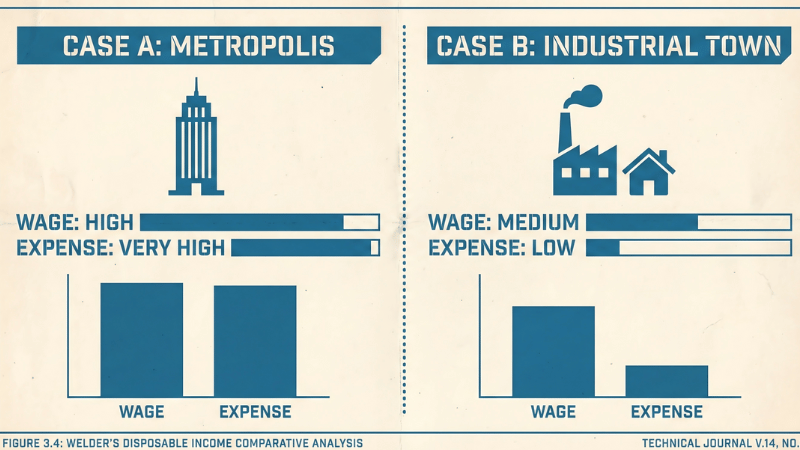
A high posted rate can still be a bad deal if hours are inconsistent or living costs explode.
Check: OT availability, shift diff, benefits, commute time, housing, and whether travel time is paid. Your goal is effective hourly after reality happens.
Overtime, per diem, and take-home pay
Quick paycheck math (gross → practical planning)
Example: $25/hr, 40 regular + 20 OT at 1.5×
Regular: 40×25 = $1,000; OT: 20×37.5 = $750; weekly gross = $1,750.
If you’re doing this kind of schedule, your annual outcome is driven less by the “average wage” and more by overtime structure and weeks actually worked.
Hidden costs that eat “high pay”
Travel/rig work can look amazing until you total the friction: fuel, lodging gaps, tool replacement, downtime between jobs.
For travel expense basics and recordkeeping, see IRS Topic 511. (IRS)
2026 outlook + decision tools
What the market is doing
ECI is a useful wage-pressure signal: compensation costs rose 3.5% for the 12 months ending September 2025. (BLS ECI PDF)
That doesn’t equal welding wage growth exactly, but it helps frame whether pay pressure is generally rising or cooling.
Highest-Leverage Move Scorecard + 30/60/90 plan
Score each lever 0–5, pick one primary move, then execute:
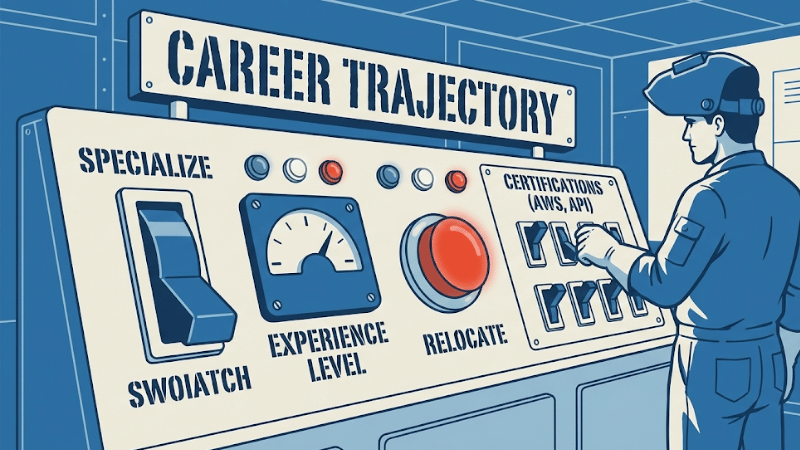
- Specialize (process/metal/code): __/5
- Switch industry: __/5
- Relocate: __/5
- Travel/shutdown: __/5
- Credentials/tests: __/5
- Negotiation: __/5
30 days: build proof (test results, scope list, quality metrics).
60 days: interview/test broadly (even if you like your shop).
90 days: negotiate with a market packet—or move.
Negotiation playbook
Build your “market packet”
Bring timestamped local benchmarks + proof of value: test results, quality outcomes, productivity, and the scope you cover beyond “I weld.”
When you’re asking for welder pay increases, you’re selling risk reduction: fewer failures, fewer delays, less babysitting.
Scripts + pushback replies
Ask: “Based on local benchmarks and my test scope, I’m targeting $X/hr. I can take on (process/lead/code responsibilities) immediately.”
If they say “budget,” reply: “What rate is approved for this scope, and what measurable criteria gets me there?”
Methodology & data notes
Sources used: BLS baseline for median/percentiles; Indeed + ZipRecruiter as market signals; ECI for wage pressure context. (BLS OOH)
Limitations: job boards skew by mix and labeling; BLS lags; overtime/per diem vary wildly. If you’re brand new, avoid high-risk travel work until safety habits are strong.
Conclusion
Use a 2026 snapshot for “today” and BLS percentiles for long-run context. The fastest income gains usually come from specialization, industry switches, location changes, or OT/travel optimization—not waiting politely for annual raises.
Treat any single “average” as incomplete: compare hourly vs annual, median vs average, and base vs total comp before making a move.
Take the Next Step
Built for Real-World Welder Pay Planning
Welder salary averages only help if you match them to your local market, skill level, process, and schedule—base rate, overtime, shift diff, and per diem where it applies. Use the 2026 snapshot, pick one high-leverage move, and avoid expensive underpricing.
➡️ Visit iKratz to See Professional Welding Solutions
Talk to People Who Understand the Trade-Offs
Every pay jump is a trade-off: specialize vs. stay general, steady hours vs. overtime, relocate vs. negotiate, and travel pay vs. real costs. iKratz specialists turn your role, location, and skills into a clear next-step plan—what to learn, what tests to pass, and what proof to bring.
➡️ Submit an Inquiry & Project Specifications Today
Frequently Asked Questions
1) What’s the difference between BLS welder pay and job-board welder pay?
BLS is standardized and slower-moving (median + percentiles). Job boards are fresher but noisier due to mix, region, and overtime/per diem effects.
2) How much do entry-level welders make in 2026?
Entry-level pay usually sits at the lower end of local ranges. The fastest jumps come from passing tests, adding a second process, and targeting higher-paying industries.
3) What’s the fastest way to increase my welder pay this year?
Pick one lever—specialize, switch industry, relocate, or optimize overtime/travel—then build a proof-backed market packet and negotiate using timestamped local benchmarks.